Key Takeaways
- On April 30, 2026, the FDA proposed to exclude semaglutide, tirzepatide, and liraglutide from the 503B bulks list, citing no clinical need for large-scale compounding of these drugs.[1]
- Novo Nordisk has reported over 100 hospitalizations and at least 10 deaths linked to compounded semaglutide, with dosing errors as a major factor.[3]
- The proposal does not immediately stop all compounding — patient-specific 503A compounding is still allowed under narrow conditions, and shortage-based 503B compounding remains an exception.[2]
- In March 2026, the FDA sent warning letters to 30 telehealth companies over misleading marketing of compounded GLP-1 products.[6]
- With Foundayo, Wegovy, and Zepbound all readily available in 2026, the prior shortage rationale for compounding has largely disappeared.[2]
A Quiet but Important FDA Move
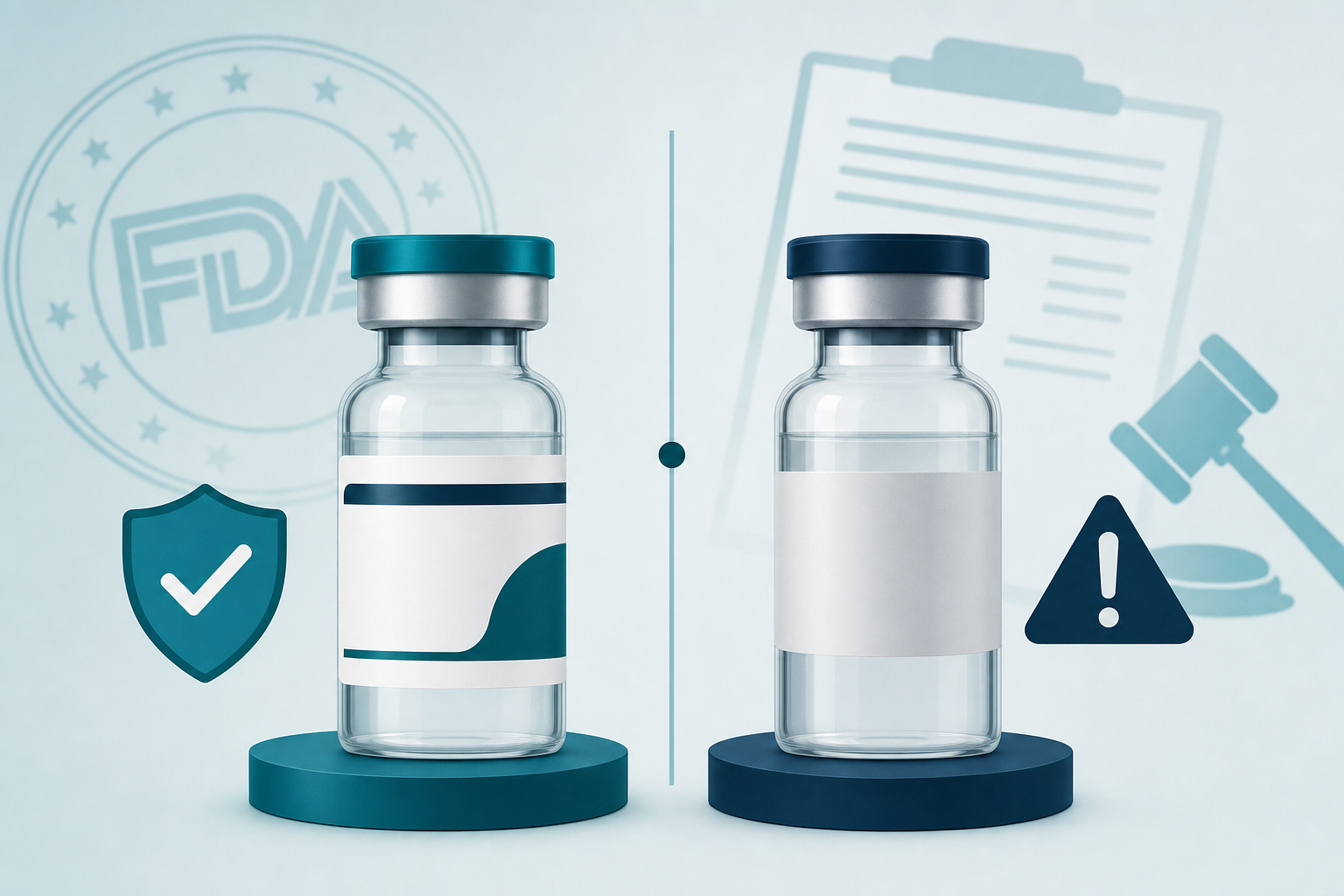
On April 30, 2026, the FDA announced a proposal that did not generate much mainstream news coverage. It did not come with the fanfare of a new drug approval. But for the millions of patients using compounded versions of semaglutide, tirzepatide, or liraglutide, it matters.[1]
The proposal targets the 503B bulks list — one of the legal pathways that has allowed large-scale compounding of GLP-1 medications to flow into the telehealth market over the past several years.[7]
This article walks through what the FDA actually proposed, what the proposal does not do, and what you should ask if you are using a compounded GLP-1 today.
What the FDA Actually Proposed
The 503B bulks list is a federal list of drug substances that outsourcing facilities are allowed to use to compound large volumes of medication — without an individual patient prescription on hand for each unit. Outsourcing facilities operate under section 503B of the Federal Food, Drug, and Cosmetic Act and are the source for much of the compounded GLP-1 supply that has reached patients through telehealth platforms.[7]
For a substance to be added to the 503B bulks list, the FDA must determine that there is a "clinical need" for compounding it. That phrase has a specific regulatory meaning. Clinical need is not about price. It is not about convenience. It is not about supply backorders. It is about whether patients have a medical reason that an FDA-approved version cannot meet — for example, an inactive-ingredient allergy or a documented need for a different formulation.[1]
After review, the FDA concluded that there is no clinical need to add semaglutide, tirzepatide, or liraglutide to the bulks list. FDA Commissioner Marty Makary put it directly: "When FDA-approved drugs are available, outsourcing facilities cannot lawfully compound using bulk drug substances unless there is a clear clinical need."[1]
The proposal is open for public comment through June 29, 2026. If finalized, it would close the bulks-list pathway entirely for these three GLP-1 substances.[1]
What It Doesn't Do
It is worth being precise here, because the headlines have not always been. This proposal is not an immediate ban on all compounded GLP-1s.[2]
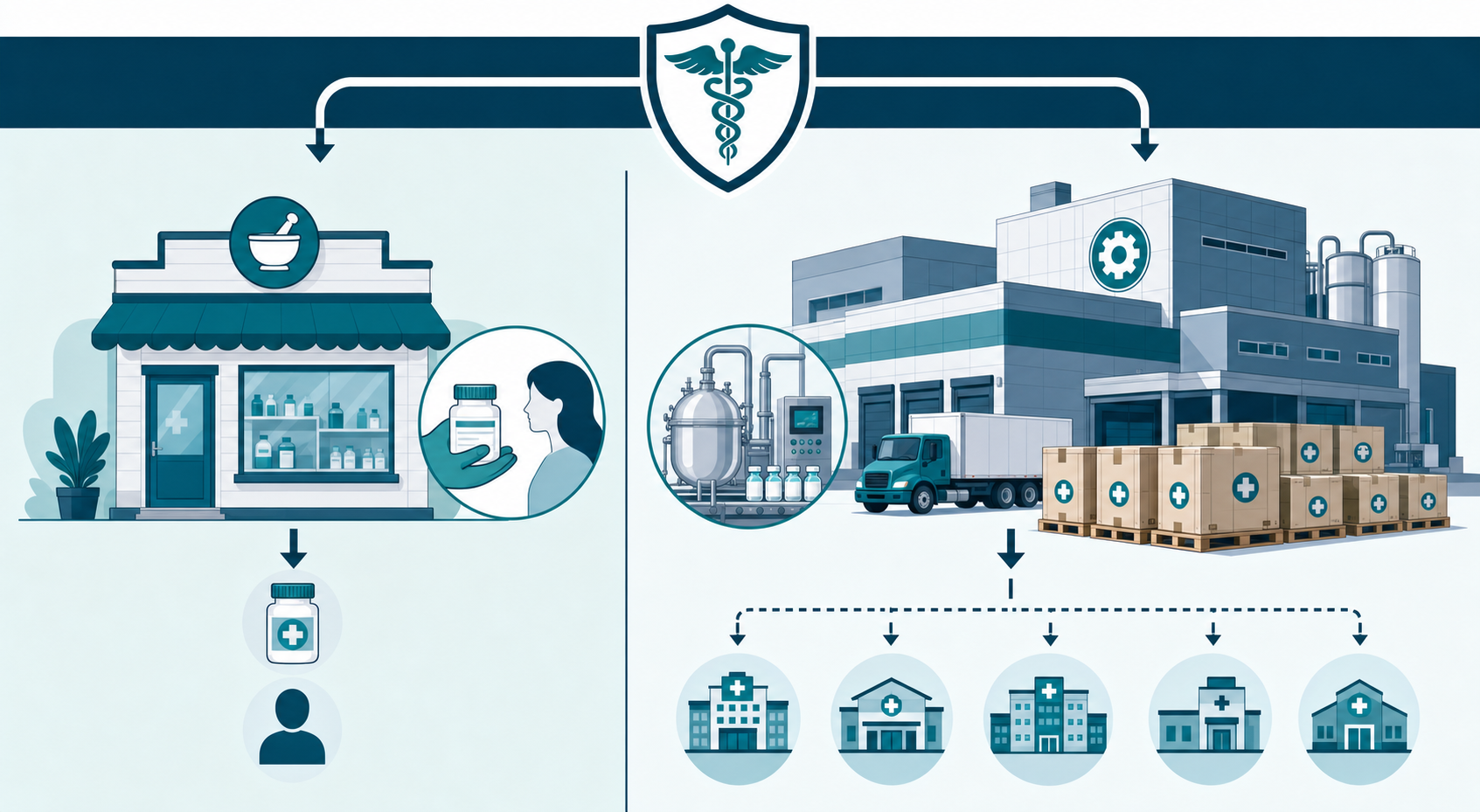
Two other pathways remain. The first is 503A compounding, which is patient-specific. A state-licensed pharmacy can still compound a GLP-1 for an individual patient with a valid prescription in narrow situations — for example, a documented allergy to an inactive ingredient in the approved product, a need for a different formulation, or a prescriber-documented significant clinical difference for that specific patient.[2]
The second is a shortage exception. 503B outsourcing facilities can still compound a drug during a confirmed FDA-recognized drug shortage. That is the legal lane many telehealth companies used during the 2023–2024 GLP-1 supply crunch. But the tirzepatide shortage was declared resolved in December 2024, and the semaglutide shortage was declared resolved in February 2025.[2]
So the proposal would not stop every compounded vial overnight. What it would do is close the bulks-list pathway for routine future use of these three drugs — removing one of the last broad legal foundations for large-volume compounding outside of patient-specific or shortage scenarios.[7]
Why This Matters: The Safety Record
The clearest argument for tightening the pathway is the safety data the FDA and manufacturers have collected over the past two years.
Novo Nordisk has documented more than 100 hospitalizations and at least 10 deaths associated with compounded semaglutide. Dosing errors are the most commonly reported issue.[3] The FDA has separately warned about adverse events tied to dosing mistakes with compounded GLP-1s, including patients receiving 5 to 20 times the intended dose. The downstream effects include severe nausea, vomiting, dehydration, hypoglycemia, and emergency department visits.[4]
There is also a chemistry problem. Some compounded products have used "salt forms" of semaglutide — semaglutide sodium or semaglutide acetate — rather than the base substance studied and approved in Ozempic and Wegovy. Those salt forms are not the same active ingredient and have not been evaluated for safety or effectiveness.[5]
To address supply-chain quality, the FDA established import alert 66-80, which allows the agency to stop GLP-1 active pharmaceutical ingredients from entering the United States when there are signals of poor quality or unverified sourcing.[5]
The core regulatory point is one many patients do not realize: compounded drugs do not go through FDA premarket review for safety, quality, or effectiveness. By definition, they are unapproved drugs. That is true whether they come from a state-licensed pharmacy or a large outsourcing facility — the oversight differs in scope, but premarket approval is not part of either picture.[5]
| Question | FDA-Approved GLP-1s | Compounded GLP-1s |
|---|---|---|
| FDA premarket review for safety, quality, effectiveness? | Yes | No |
| Standardized manufacturing under cGMP? | Yes | Variable (cGMP for 503B only) |
| Active ingredient confirmed identical to studied drug? | Yes | Not always (salt forms common) |
| Documented hospitalization/death cases? | Standard pharmacovigilance | 100+ hospitalizations, 10+ deaths reported[3] |
| 2026 availability? | Wegovy, Zepbound, Mounjaro, Ozempic, Saxenda, Foundayo readily available[2] | Still being marketed despite shortage resolution |
| 2026 cost (with savings programs) | $25 to $349 per month | Often $150 to $400 per month |
| 503B compounding pathway after FDA finalization | N/A | Would be closed for routine use[1] |
What This Means for You
If you are using a GLP-1 medication right now, here is a practical checklist.
Ask. You have the right to know whether the medication you have been prescribed is an FDA-approved product or a compounded one. Some telehealth platforms have not been clear about this. A direct question to your prescriber settles it.
Look at the packaging. FDA-approved versions come in branded boxes and pens — Wegovy, Ozempic, Mounjaro, Zepbound, Saxenda, or the newer oral option Foundayo. Compounded versions often arrive in unlabeled vials or vials labeled by a compounding pharmacy.
Verify the source. If you are using a compounded GLP-1, check where your provider is sourcing it. State-licensed 503A pharmacies operating under valid patient-specific prescriptions are the lower-risk pathway. Products marketed as "research grade" or sold direct to consumers without a clear prescriber relationship are a red flag.
Compare the cost. Manufacturer savings programs have changed the math. With Novo Nordisk and Eli Lilly savings cards now widely available, FDA-approved GLP-1s can run as little as $25 to $50 per month for many patients with insurance. The gap with compounded products has narrowed substantially.
Do not stop your medication on your own. Abruptly stopping a GLP-1 can mean rebound appetite, weight regain, and worsening blood sugar control. If you are on a compounded version, the right move is a conversation with a clinician about transitioning to an FDA-approved product — not a cold-stop.
Report problems. If you experience an adverse event with any GLP-1 product, you can report it to FDA MedWatch. Those reports feed the same pharmacovigilance system that informed this proposal.[4]
The Bigger Picture
The April 30 proposal does not stand alone. It is the latest in a sequence of FDA actions tightening the legal space around compounded GLP-1s.[7]
In March 2026, the agency sent warning letters to 30 telehealth companies over misleading marketing of compounded GLP-1 products.[6] In April, additional warning letters targeted unapproved peptides. Then came the April 30 bulks-list exclusion proposal.
The trend is clear: as FDA-approved supply has caught up with demand, the regulatory tolerance for large-scale compounding is ending. Current evidence shows the safety risks of poorly sourced compounded GLP-1s; the data tells us cost gaps are narrowing; and FDA guidance now points in one direction.[7]
If you are using a compounded GLP-1, expect changes in your supply over the coming months. A conversation with your prescriber about an FDA-approved alternative is worth having sooner rather than later.
References
- U.S. Food and Drug Administration. "FDA Proposes to Exclude Semaglutide, Tirzepatide, and Liraglutide from the 503B Bulks List." April 30, 2026. fda.gov
- U.S. Food and Drug Administration. "FDA Clarifies Policies for Compounders as National GLP-1 Supply Begins to Stabilize." fda.gov
- Hilliard Law. "The Dangers of Compounded Semaglutide: The Effect." January 2025. hilliard-law.com
- U.S. Food and Drug Administration. "FDA Alerts Health Care Providers, Compounders, and Patients of Dosing Errors Associated with Compounded Semaglutide." fda.gov
- U.S. Food and Drug Administration. "FDA's Concerns with Unapproved GLP-1 Drugs Used for Weight Loss." fda.gov
- U.S. Food and Drug Administration. "FDA Warns 30 Telehealth Companies Against Illegal Marketing of Compounded GLP-1s." fda.gov
- ArentFox Schiff. "The Shot Heard 'Round the Pharmacy: FDA Takes Aim at GLP-1 Compounders." Longevity Lens. afslaw.com