Key Takeaways
- Tretinoin is the gold-standard prescription retinoid, FDA-approved for both acne (1971) and photoaging (1995). No topical medication has more RCT evidence for reversing sun-induced skin changes.[9]
- Daily broad-spectrum SPF 30+ sunscreen is the most important adjunct. UV exposure drives 80–90% of visible skin aging.[10]
- Concentrations matter less than adherence. Tretinoin 0.025% and 0.1% produce equivalent efficacy at 48 weeks with significantly less irritation at 0.025% (Olsen et al., 1995).[7]
- Adapalene 0.3% gel is non-inferior to tretinoin 0.05% for photoaging (Bagatin 2018) and better tolerated, a reasonable alternative for retinoid-sensitive skin.[5]
- The AAD 2024 acne guidelines give topical retinoids a "strong" recommendation (pooled RR 1.57 for IGA improvement at 12 weeks). Tretinoin, adapalene, tazarotene, and trifarotene all work.[6]
- Retinoid dermatitis is expected, not a failure. The "purge phase" (weeks 2–6) of dryness, redness, and peeling improves with buffering strategies (moisturizer before tretinoin, every-other-night dosing, pea-sized amount to dry face).
- Tretinoin is contraindicated in pregnancy. Effective contraception should be in place before starting. Discontinue immediately if pregnancy is confirmed.[12]
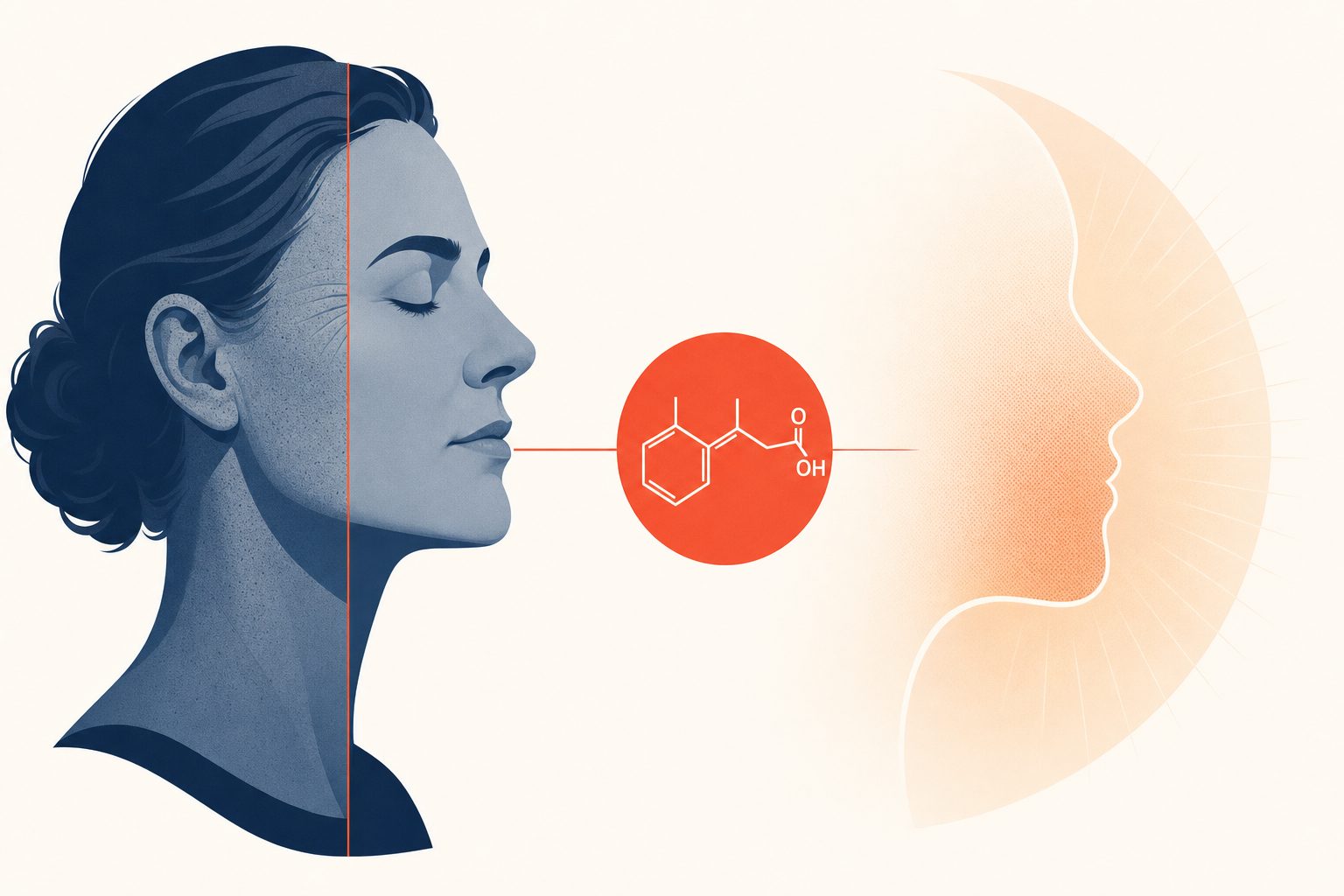
Tretinoin, prescription-strength all-trans retinoic acid, is the most extensively studied topical medication in dermatology, with more than four decades of randomized controlled trial evidence behind it. This guide is a physician's evidence-based look at how tretinoin works for photoaging and acne, how it compares to adapalene, tazarotene, and trifarotene, how to start it without unnecessary irritation, and what the evidence actually says about results in 2026. Every material claim is cited to a primary source.
What Is Photoaging?
Photoaging is the cumulative skin damage caused by chronic exposure to ultraviolet (UV) radiation, distinct from intrinsic (chronological) aging that occurs regardless of sun exposure. Photoaging accounts for the vast majority of visible age-related skin change, the American Academy of Dermatology attributes 80 to 90 percent of visible skin aging to UV exposure rather than the passage of time itself.[10]
At the cellular level, UV radiation, particularly UVA, which penetrates deep into the dermis, generates reactive oxygen species that activate matrix metalloproteinases (MMPs). These enzymes degrade collagen and elastin faster than the skin can rebuild them. Over years of exposure, this produces the clinical hallmarks of photoaging:
- Fine and coarse wrinkling from collagen and elastin breakdown
- Mottled hyperpigmentation and solar lentigines ("age spots" or "sun spots") from irregular melanocyte activity
- Sallowness, a dull, yellowish skin tone from glycation and collagen cross-linking
- Skin roughness and textural irregularity from disordered keratinocyte turnover
- Telangiectasias (visible small blood vessels) from vascular wall damage
Unlike intrinsic aging, which is largely genetically determined and difficult to modify, photoaging is substantially preventable and partially reversible. This is the central reason tretinoin and sunscreen, not expensive procedures, remain the highest-yield interventions for most people. Landmark work by Fisher and colleagues in the New England Journal of Medicine established the molecular pathway by which UV light induces collagen-degrading enzymes and showed that topical tretinoin could interrupt this pathway.[8]
How Tretinoin Works
Cellular mechanism
Tretinoin is all-trans retinoic acid, the biologically active form of vitamin A. Unlike over-the-counter retinol or retinyl esters, tretinoin requires no enzymatic conversion, it binds directly to nuclear retinoic acid receptors (RARs) and retinoid X receptors (RXRs) in keratinocytes and fibroblasts, directly regulating gene transcription. This produces several measurable effects:
- Increased keratinocyte turnover, which thins the stratum corneum, smooths surface texture, and helps clear comedones
- Stimulated fibroblast activity and new collagen synthesis (types I and III), which is the primary mechanism behind wrinkle reduction[2]
- Inhibition of UV-induced matrix metalloproteinases, slowing further collagen breakdown[8]
- Dispersal of melanin granules within keratinocytes, which improves mottled hyperpigmentation and lentigines over months of use
- Normalized desquamation, reducing comedone formation, which is the basis for its acne indication
The landmark 1993 Griffiths study in the New England Journal of Medicine used punch biopsies to directly demonstrate that tretinoin restored measurable new collagen formation in photodamaged human skin after just 4 months of treatment, one of the first pieces of direct histological proof that a topical medication could partially reverse, rather than merely mask, photoaging.[2]
What tretinoin does not do
Tretinoin does not tighten skin, remove deep static wrinkles caused by volume loss, or replace lost subcutaneous fat. It is a treatment for the epidermal and superficial dermal changes of photoaging and for follicular changes in acne, not a substitute for procedures that address structural volume loss (fillers) or significant skin laxity (energy-based devices, surgical lifting). Setting this expectation correctly is one of the most important parts of a good tretinoin conversation. Patients who expect tretinoin to produce facelift-level change are likely to be disappointed and may stop a genuinely beneficial medication prematurely; patients who understand it as a slow, cumulative improvement in skin quality, tone, and fine lines tend to stay adherent long enough to see the real benefit.
Tretinoin also does not treat active sunburn, does not function as a moisturizer (and in fact tends to be mildly drying, particularly during the adjustment period), and does not substitute for basic photoprotection. It works best as one component of a broader photoaging-prevention regimen rather than as a stand-alone fix.
The retinoid family
"Retinoid" is an umbrella term for vitamin A derivatives. They differ in receptor selectivity, potency, and how much biotransformation is required before they become active:
- Retinol (OTC): must be converted to retinaldehyde, then to retinoic acid, inside the skin, a two-step process that is inefficient and produces a much weaker, gentler effect
- Retinaldehyde (OTC): one conversion step closer to active acid; intermediate potency
- Tretinoin (Rx): the active acid itself; no conversion needed; the most potent and most studied
- Adapalene (OTC 0.1% / Rx 0.3%): a synthetic retinoid that selectively binds RAR-β and RAR-γ; different receptor profile than tretinoin but clinically effective and generally better tolerated
- Tazarotene (Rx): a synthetic retinoid prodrug, converted to its active form (tazarotenic acid) in skin; among the most potent topical retinoids
- Trifarotene (Rx): the newest retinoid, highly selective for RAR-γ, the predominant retinoic acid receptor in skin
Nearly everyone starting tretinoin experiences some degree of dryness, redness, or peeling in the first several weeks. This is expected retinization, not an allergic reaction or a sign the medication is failing. Stopping at week 2 because of irritation is the single most common reason people never experience tretinoin's benefits.
What's Changed in 2024 to 2026
Retinoid science has continued to evolve. Several developments from the past two years are relevant to a modern tretinoin conversation, spanning clinical guidance, pricing, formulation options, and how patients now typically access a prescription.
The AAD published fully updated acne guidelines in 2024. The American Academy of Dermatology's 2024 guidelines of care for acne vulgaris give topical retinoids (including tretinoin, adapalene, tazarotene, and trifarotene) a strong recommendation based on high-certainty evidence, with a pooled relative risk of 1.57 for Investigator Global Assessment (IGA) improvement at 12 weeks compared with vehicle.[6] The guidelines also explicitly endorse combination therapy (retinoid plus benzoyl peroxide plus/minus topical or oral antibiotic) as a good practice statement for inflammatory acne.
Generic tretinoin pricing has fallen substantially. Generic tretinoin cream and gel across all three standard concentrations (0.025%, 0.05%, 0.1%) now typically costs $25 to $75 cash-pay for a 30-45g tube at major U.S. pharmacies with discount cards, a meaningful decrease from a decade ago and a major driver of improved access via telehealth.
Tazarotene 0.045% lotion has become a mainstream acne option. The lower-concentration lotion formulation (originally studied and approved for acne in the late 2010s) has continued to gain adoption because it delivers efficacy comparable to higher-concentration tazarotene cream with meaningfully less irritation, addressing tazarotene's historical tolerability disadvantage.
Trifarotene remains a niche, but real, option. Approved specifically for acne in patients 12 years and older, including truncal (back and chest) acne, an indication most other topical retinoids were never formally studied for, trifarotene 0.005% cream remains the most receptor-selective topical retinoid on the market, though brand-only pricing limits widespread use.
Telehealth prescribing for tretinoin is fully normalized. Tretinoin is a non-controlled prescription medication, and licensed clinicians can evaluate skin type, acne severity or photoaging signs, pregnancy status, and photoprotection habits via a synchronous telehealth visit and prescribe an appropriate strength without an in-person exam in most straightforward cases.
Decision Framework: OTC Retinol, Adapalene 0.1%, or Prescription Tretinoin
| Scenario | Recommended approach | Rationale |
|---|---|---|
| Retinoid-naïve, moderate photoaging | Tretinoin 0.025% cream, every other night × 4 weeks then nightly | Highest RCT evidence; low-dose start minimizes dermatitis (Olsen 1995)[7] |
| Sensitive skin or rosacea history | Adapalene 0.1% (OTC) or 0.3% (Rx), nightly | Non-inferior at 0.3% (Bagatin 2018); better tolerability[5] |
| Comedonal acne | Tretinoin 0.025% or adapalene 0.1%, nightly | AAD 2024 strong recommendation; tretinoin most effective for comedones[6] |
| Inflammatory acne | Tretinoin + benzoyl peroxide + topical antibiotic (multimodal) | AAD 2024 good practice statement, multiple mechanisms of action[6] |
| Severe photoaging (deep wrinkles, extensive lentigines) | Tazarotene 0.1% cream or tretinoin 0.1% cream, nightly | Higher-strength retinoid; consider adjunct procedural |
| Pregnancy planned or ongoing | No retinoid | Contraindicated; azelaic acid is a safe alternative[12] |
| Failed retinoid due to irritation | Buffer (moisturizer sandwich) or step down to adapalene 0.1% | Preserve retinoid benefit while reducing dermatitis |
Adherence beats potency. A patient who uses adapalene 0.1% consistently for a year will get better results than a patient who buys tretinoin 0.1%, gets irritated in week 2, and quits. Start lower than you think you need to.
Tretinoin for Photoaging: The Evidence
The landmark trials
Tretinoin's photoaging indication rests on one of the longer, more rigorous evidence bases in topical dermatology. The 1988 Weiss study, published in JAMA, was the first double-blind, vehicle-controlled trial to demonstrate that topical tretinoin measurably improved photoaged skin, fine wrinkling, roughness, and hyperpigmentation all improved significantly compared with vehicle cream over 4 months.[1] This trial is what ultimately supported the FDA's 1995 approval of tretinoin for photodamage.
Five years later, the 1993 Griffiths study in the New England Journal of Medicine went a step further, using skin biopsies to directly show that tretinoin restored new collagen (type I procollagen) formation in photodamaged skin, providing histological proof of a disease-modifying, not merely cosmetic, effect.[2]
A 2005 two-year, randomized, placebo-controlled trial (Kang et al.) confirmed that benefits from tretinoin emollient cream 0.05% were sustained with long-term use and that the drug remained well tolerated over two years of continuous therapy, important because photoaging treatment is inherently a long-term commitment, not a short course.[3]
Dose-response and duration
A comprehensive 2022 systematic review in the International Journal of Women's Dermatology pooled data from 7 randomized controlled trials of topical tretinoin for photoaging.[4] The consistent finding across trials: tretinoin significantly improved wrinkling, mottled hyperpigmentation, sallowness, and lentigines compared with vehicle, with a clear time course:
| Timeline | Expected changes |
|---|---|
| Weeks 1–2 | Onset of dryness, mild peeling; slight redness |
| Weeks 2–6 | Retinoid dermatitis peaks ("purge phase"); acne may transiently worsen |
| Weeks 6–12 | Skin adapts; irritation decreases; comedones improve |
| Months 3–4 | First measurable improvement in fine wrinkles and pigmentation (Weiss 1988; IJWD 2022 review)[1][4] |
| Months 6–12 | Substantial improvement in wrinkling, hyperpigmentation, sallowness |
| Months 12–24+ | Continued improvement; maintenance dose can be reduced to 3×/week |
A key 1997 follow-up study by Olsen and colleagues found that once photoaging improvement is achieved, a reduced-frequency maintenance regimen (as infrequently as three times per week) sustains benefit, useful for patients who want to reduce long-term irritation without losing results.[7]
Fine vs coarse wrinkles
Tretinoin shows its most consistent, largest effect on fine wrinkles, the superficial lines from epidermal thinning and early collagen loss. Effects on coarse (deep, static) wrinkles are real but more modest, since deep wrinkles often involve structural changes (volume loss, deep dermal collagen architecture) that a topical medication cannot fully reverse. This distinction is clinically important for setting expectations: tretinoin is highly effective for early-to-moderate photoaging and less transformative for advanced, deeply wrinkled skin, where it is best used as an adjunct to procedural treatment rather than a stand-alone solution.
Hyperpigmentation and lentigines
Tretinoin's effect on mottled hyperpigmentation and solar lentigines is one of its most reliable, patient-visible benefits. By normalizing keratinocyte turnover and dispersing melanin granules, tretinoin produces a more even overall skin tone over 6 to 12 months, independent of its wrinkle effect. This makes it a rational first-line choice for patients whose primary photoaging complaint is uneven pigmentation rather than wrinkling.
Clinically, this often means two patients starting tretinoin for the same reason, "sun damage", see somewhat different first results: one may notice pigmentation evening out first, while another notices texture and fine lines improving first, before pigmentation catches up. Both patterns are normal and both continue to improve with consistent use over the following months.
Tretinoin for Acne: The Evidence
AAD 2024 recommendations
The American Academy of Dermatology's 2024 guidelines of care for the management of acne vulgaris give topical retinoids, tretinoin, adapalene, tazarotene, and trifarotene, a strong recommendation as first-line therapy for acne, based on a large body of high-certainty randomized trial evidence.[6] The pooled relative risk for Investigator Global Assessment (IGA) treatment success at 12 weeks was 1.57 versus vehicle across retinoid trials, a substantial and clinically meaningful effect.
The mechanism for acne differs slightly in emphasis from the photoaging mechanism: retinoids normalize the abnormal desquamation (shedding) of follicular keratinocytes that initiates comedone formation, and they have direct anti-inflammatory effects that reduce inflammatory lesion counts.[13]
Comparative efficacy
Head-to-head and network meta-analytic data show all major topical retinoids reduce both comedonal and inflammatory acne lesions, with some differences in speed of onset and tolerability:
- Tretinoin has the deepest evidence base and is considered highly effective for comedonal (blackhead/whitehead) acne specifically
- Adapalene tends to be better tolerated, which supports higher long-term adherence
- Tazarotene is generally the most potent single agent but also the most irritating
- Trifarotene shows the most selective receptor binding and specific efficacy data for truncal acne
Combination therapy
The AAD 2024 guidelines include a good practice statement endorsing multimodal therapy for inflammatory acne: a topical retinoid combined with benzoyl peroxide and, when indicated, a topical or oral antibiotic.[6] This reflects acne's multifactorial pathophysiology (abnormal keratinization, Cutibacterium acnes proliferation, inflammation, and sebum production), no single mechanism of action addresses all four drivers, which is why combination regimens consistently outperform monotherapy for anything beyond mild comedonal acne.
Retinoid Comparison: Tretinoin vs Adapalene vs Tazarotene vs Trifarotene
| Retinoid | Strength(s) | FDA-Approved Indications | Best For | Typical Cash Price (30g/tube, 2026) | Rx or OTC |
|---|---|---|---|---|---|
| Tretinoin | 0.025%, 0.05%, 0.1% cream/gel; 0.05% lotion | Acne (1971), photoaging (1995) | Photoaging gold standard; most RCT evidence | $25–$75 generic | Rx |
| Adapalene | 0.1% gel/cream, 0.3% gel | Acne | Sensitive skin; retinoid-naïve patients | 0.1%: $12–$30 OTC; 0.3%: $30–$60 | 0.1% OTC / 0.3% Rx |
| Tazarotene | 0.045% lotion, 0.05%, 0.1% cream/gel | Acne, plaque psoriasis, photoaging (0.1% cream) | Severe photoaging; recalcitrant acne | $80–$200 | Rx |
| Trifarotene | 0.005% cream | Acne (12+ years) | Truncal acne; comedonal | $500+ (brand only) | Rx |
The pivotal head-to-head trial here is Bagatin and colleagues' 2018 randomized study comparing adapalene 0.3% gel with tretinoin 0.05% cream for cutaneous photoaging: the two performed comparably on validated photoaging severity scores, with adapalene showing a modestly better tolerability profile.[5] For tazarotene, a large multicenter trial by Kang and colleagues comparing 0.01% to 0.1% tazarotene creams against tretinoin 0.05% emollient cream found tazarotene 0.1% produced comparable or slightly superior improvement in fine wrinkling, with a dose-dependent increase in local irritation.[14]
How to Use Tretinoin: A Practical Protocol
Starting protocol
The most common reason tretinoin fails is starting too aggressively. A conservative, evidence-informed starting protocol minimizes retinoid dermatitis while still reaching an effective maintenance dose:
- Weeks 1–2: apply a pea-sized amount every third night to clean, completely dry skin
- Weeks 3–4: advance to every other night if tolerated
- Weeks 5 onward: advance to nightly if tolerated
- Months 12–24+: once photoaging or acne benefit is established, some patients can step down to 3 nights per week for maintenance without losing benefit (Olsen et al., 1997)[7]
Application technique
Wash the face with a gentle, non-stripping cleanser and wait until skin is completely dry, applying tretinoin to damp skin increases penetration and irritation substantially. This "20-minute rule" is one of the most consistently cited practical tips among dermatologists, since even slightly damp skin allows meaningfully more drug to penetrate the stratum corneum, disproportionately increasing irritation without a proportional gain in efficacy. Apply a thin layer, avoiding the eyelids, nostrils, and the corners of the mouth (all mucous membrane-adjacent areas that are disproportionately sensitive). Wait at least 20 to 30 minutes before applying any other product, including moisturizer, if irritation is a concern. The neck and chest, if treated, should be approached even more cautiously, since skin in these areas is thinner and typically more reactive than facial skin.
The pea-sized rule
A pea-sized amount, roughly 0.5 to 1 gram, is sufficient to cover the entire face. This is one of the most commonly violated rules in practice: patients assume more product means faster results, but excess tretinoin does not improve outcomes and substantially increases the risk and severity of retinoid dermatitis. If a pea-sized amount does not visibly cover the whole face, thin it further by mixing with a small amount of moisturizer rather than adding more tretinoin.
Timing and photostability
Tretinoin should be applied at night. All-trans retinoic acid is photolabile, it degrades on exposure to UV light, meaning daytime application both wastes the medication and increases photosensitivity precisely when UV exposure is highest. Nighttime dosing also allows the medication to work uninterrupted while the skin barrier is not simultaneously managing sunscreen, makeup, and daytime environmental exposure.
Managing Retinoid Dermatitis
The purge phase (weeks 2–6)
Retinoid dermatitis, dryness, redness, peeling, and a stinging or burning sensation, typically peaks between weeks 2 and 6 of treatment and is the expected physiologic response to accelerated cell turnover, not a sign of an allergic reaction or treatment failure. For patients being treated for acne, comedones can also transiently worsen during this window as tretinoin brings existing microcomedones to the surface faster than before ("purging"). This is temporary and typically resolves as the skin adapts over 6 to 12 weeks.
Buffering strategies
Several evidence-informed strategies reduce retinoid dermatitis without meaningfully reducing efficacy:
- Moisturizer sandwich: apply a bland, fragrance-free moisturizer, wait several minutes, apply tretinoin, then apply moisturizer again on top once the tretinoin has absorbed. This dilutes peak concentration at the skin surface while still delivering active medication.
- Every-other-night or every-third-night dosing until tolerance builds (see starting protocol above)
- Pea-sized amount only, do not increase quantity to speed up results
- Gentle, non-foaming cleanser, avoid additional actives (exfoliating acids, scrubs) during the adjustment period
- Bland, fragrance-free moisturizer applied liberally on non-tretinoin mornings and nights
When to reduce frequency
If dermatitis is significant, widespread redness, visible peeling, or discomfort that interferes with daily activities, reduce application frequency (for example, from nightly back to every third night) rather than stopping entirely. Most patients can resume advancing frequency after the skin has recovered for 1 to 2 weeks. Complete discontinuation should be reserved for severe reactions (marked swelling, blistering, or signs of true allergic contact dermatitis), which are uncommon.
Products to avoid concurrently
During the adjustment period, avoid layering tretinoin with other potentially irritating actives:
- Exfoliating acids (glycolic, salicylic, lactic acid) at high concentration
- Physical scrubs or exfoliating brushes/devices
- Benzoyl peroxide applied at the same time as tretinoin (space to different times of day; see FAQ)
- Astringent, alcohol-based toners
Tretinoin is contraindicated in pregnancy. Effective contraception should be confirmed before starting therapy, and tretinoin should be discontinued immediately if pregnancy is confirmed or suspected. Azelaic acid is a pregnancy-safe alternative for acne management.[12]
Sunscreen: The Non-Negotiable Companion
Of every recommendation in this guide, this is the one clinicians repeat most often, and the one patients most often skip. Sunscreen is not an optional add-on to tretinoin therapy, it is a core, non-negotiable component of the regimen for two independent reasons. First, tretinoin can increase photosensitivity by thinning the stratum corneum during the adjustment period. Second, and more fundamentally, UV exposure is the primary cause of the photoaging that tretinoin is being used to treat, responsible for an estimated 80 to 90 percent of visible skin aging according to the American Academy of Dermatology.[10] Using tretinoin without consistent sunscreen is working against the treatment's own purpose.
The AAD recommends broad-spectrum sunscreen with SPF 30 or higher, applied every morning regardless of weather or season, and reapplied roughly every two hours with direct sun exposure. Broad-spectrum coverage (protecting against both UVA and UVB) is essential, since UVA, not blocked by SPF alone, is the primary driver of the collagen-degrading pathway that causes photoaging.[10]
If a patient will only reliably do one thing beyond taking the medication itself, make it daily sunscreen. It protects the investment tretinoin is making in the skin and prevents new photodamage from accumulating faster than tretinoin can repair the old damage.
Contraindications and Safety
Pregnancy and breastfeeding
Tretinoin is contraindicated in pregnancy. Although systemic absorption from topical application is low, oral retinoids are well-established human teratogens, and topical tretinoin has not been studied in trials adequate to rule out risk, so the standard of care is complete avoidance during pregnancy. A MotherToBaby/OTIS fact sheet summarizing the available data notes that studies to date have not shown a clear pattern of birth defects with topical tretinoin, but the data remain too limited to consider it definitively safe, and the recommendation remains to avoid use during pregnancy and while trying to conceive.[12] Data on use during breastfeeding are similarly limited, and most clinicians recommend avoiding it during lactation as well, given minimal established benefit-risk justification. Effective contraception should be confirmed before starting tretinoin in patients who could become pregnant, and it should be discontinued immediately upon a positive pregnancy test. Azelaic acid is a reasonable pregnancy-safe alternative for acne.
Photosensitivity
Tretinoin can increase skin sensitivity to UV light, particularly during the initial weeks of therapy when the stratum corneum is thinner than usual. This is a second, independent reason (beyond preventing photoaging itself) that daily broad-spectrum sunscreen is required during tretinoin therapy, without it, patients are at increased risk of sunburn and may inadvertently worsen the pigmentary changes tretinoin is meant to treat.
Concurrent medications and procedures
Patients should disclose tretinoin use before starting other exfoliating or photosensitizing treatments, and clinicians should ask about tretinoin use before performing or scheduling procedures that affect the skin surface. Relevant interactions and considerations:
- Chemical peels, laser resurfacing, waxing, and electrolysis: tretinoin thins the stratum corneum and can increase sensitivity to these procedures; many clinicians recommend pausing tretinoin for several days to a week before and after such procedures
- Other topical retinoids or exfoliants: do not combine tretinoin with additional retinoids, high-concentration acids, or physical exfoliation, which compounds irritation without added benefit
- Isotretinoin (oral): topical tretinoin is not typically continued during oral isotretinoin therapy, since oral isotretinoin already provides potent systemic retinoid effect
- Sulfur- or resorcinol-containing products: can increase local irritation when combined with tretinoin
None of these interactions are absolute contraindications to tretinoin therapy, they are considerations that call for spacing, sequencing, or a brief pause around a specific procedure rather than permanent discontinuation. A clinician familiar with a patient's full skincare and procedural history is best positioned to sequence these appropriately.
What Doesn't Work: Retinol Myths, Copper Peptides, and "Alternatives"
Because tretinoin requires a prescription and carries a real, if usually mild, side-effect burden, the skincare market is full of alternatives marketed as equivalent without the downsides. The evidence for most of these is thin.
"Retinol is basically the same as tretinoin, just gentler." This oversimplifies real pharmacology. Retinol must undergo two sequential enzymatic conversions in the skin (to retinaldehyde, then to retinoic acid) before it becomes biologically active, and this conversion is inefficient. The practical result is a meaningfully weaker effect at any given concentration, useful for very sensitive skin or as a gentle introduction to retinoids, but not a substitute for prescription tretinoin when a robust photoaging or acne effect is the goal.
Copper peptides. Marketed heavily for "collagen stimulation," copper peptide evidence is largely limited to small, industry-sponsored studies without the RCT rigor behind tretinoin. They are not harmful, but they should not be positioned as a tretinoin-equivalent.
Bakuchiol. A plant-derived compound marketed as a "natural retinol alternative." A small number of trials suggest some efficacy for photoaging, but the evidence base is far smaller and less rigorous than tretinoin's, and it should be considered a mild complementary ingredient rather than a replacement.
"Retinol creams that work overnight" and similarly implausible marketing claims. No topical ingredient, tretinoin included, produces meaningful photoaging reversal in days. The evidence consistently shows measurable change beginning around month 3 to 4 at the earliest.[1] Any product claiming faster dramatic results should be viewed skeptically.
Extremely high-concentration OTC retinol serums with no clinical trial data. Concentration alone does not establish efficacy or safety; several OTC serums marketed at unusually high retinol percentages have no published trial data to support the marketing claim and can cause significant irritation without a demonstrated efficacy advantage.
The broader pattern across all of these alternatives is the same: none of them has been studied with the depth, duration, or methodological rigor of tretinoin's evidence base, which spans double-blind vehicle-controlled trials, histologic biopsy-confirmed mechanism studies, and multi-year randomized follow-up.[11] That does not mean gentler alternatives have no role, for genuinely retinoid-intolerant skin, a well-formulated retinol or adapalene product used consistently is far better than no retinoid at all. But patients should choose alternatives with realistic expectations about the evidence gap, not marketing claims that imply equivalence to prescription tretinoin.
Red Flags: When to Contact a Clinician
Contact a clinician promptly if you experience any of the following while using tretinoin:
- Severe swelling, blistering, or signs of a true allergic contact reaction, this is distinct from the expected mild dryness and redness of retinoid dermatitis and warrants prompt discontinuation and evaluation
- Positive pregnancy test or suspected pregnancy, discontinue tretinoin immediately and contact a clinician
- Severe sunburn or unusual sun sensitivity that occurs despite consistent sunscreen use
- Signs of secondary skin infection, increasing warmth, spreading redness, pus, or fever, particularly if acne lesions have been manipulated or picked
- Persistent, worsening irritation beyond 6 to 8 weeks that does not respond to reduced frequency or buffering strategies
- New or worsening acne that fails to improve after 3 months of consistent, correctly-applied therapy, may indicate the need for a different regimen or combination therapy
Frequently Asked Questions
Yes. Tretinoin is the only topical retinoid FDA-approved for photoaging, and it has more randomized controlled trial evidence behind it than any other topical anti-aging treatment.[9] A 2022 systematic review of 7 RCTs confirmed tretinoin significantly improves fine and coarse wrinkling, mottled hyperpigmentation, sallowness, and lentigines, with measurable effects beginning around 4 months and continuing for at least 24 months of continued use.[4]
Most people notice softer, smoother skin texture within 6 to 12 weeks as retinoid dermatitis subsides. Measurable improvement in fine wrinkles and pigmentation typically begins around month 3 to 4 and continues progressively through at least 24 months of daily use.[1][4] Photoaging is a slow process to develop and a slow process to reverse; tretinoin is not a quick fix.
Tretinoin is prescription-strength all-trans retinoic acid that binds directly to retinoic acid receptors, requiring no conversion in the skin. Retinol is an over-the-counter precursor that the skin must convert through multiple enzymatic steps to become active, making it substantially weaker but gentler. Adapalene is a synthetic retinoid, available over the counter at 0.1% and by prescription at 0.3%, that is FDA-approved for acne and shows efficacy for photoaging comparable to tretinoin 0.05% in head-to-head trials, generally with less irritation.[5]
Most retinoid-naive patients should start every other night for 2 to 4 weeks to let the skin build tolerance, then advance to nightly use as tolerated. Once skin has adapted, nightly use produces the best results. For long-term maintenance after 12 to 24 months, some patients successfully step down to 3 nights per week without losing benefit.[7]
This is the expected "purge phase." Tretinoin accelerates skin cell turnover, which can bring existing microcomedones to the surface faster than usual, causing a temporary flare that typically peaks around weeks 2 to 6. This is not a sign the medication is failing and is not a reason to stop. It usually resolves on its own as the skin adapts; buffering strategies can reduce discomfort in the meantime.
No. Tretinoin is contraindicated in pregnancy. While topical absorption is low, oral retinoids are well-established teratogens, and topical tretinoin has not been adequately studied to rule out risk, so the standard of care is to avoid it entirely during pregnancy and while breastfeeding.[12] Effective contraception should be in place before starting tretinoin, and it should be discontinued immediately if pregnancy is confirmed or suspected. Azelaic acid is a pregnancy-safe alternative for acne.
Yes, this is non-negotiable. Tretinoin increases skin cell turnover and can increase photosensitivity, and UV exposure is itself the primary driver of the photoaging that tretinoin is meant to treat, responsible for 80 to 90 percent of visible skin aging.[10] Daily broad-spectrum SPF 30 or higher sunscreen is the single most important adjunct to tretinoin therapy, both for safety and for not undoing the treatment's benefit.
At night. Tretinoin is photosensitive and degrades on exposure to UV light, so nighttime application preserves potency. It also allows the medication to work uninterrupted while sunscreen and makeup are not needed, and minimizes the practical overlap between an active retinoid and daytime sun exposure.
Niacinamide pairs well with tretinoin and can reduce irritation. Vitamin C is best used in the morning while tretinoin is used at night, since combining them directly can reduce stability and increase irritation for some people. Benzoyl peroxide can be used with tretinoin for acne, but applying both at the same time can increase dryness; many clinicians recommend applying them at different times of day (for example, benzoyl peroxide in the morning, tretinoin at night).
A pea-sized amount (roughly the size of a pea, about 0.5 to 1 gram) is sufficient to cover the entire face. Using more does not improve results and significantly increases the risk of retinoid dermatitis. The product should be applied to clean, completely dry skin as a thin layer, avoiding the eyes, nostrils, and corners of the mouth.
Yes. Tretinoin is a non-controlled prescription medication, and a licensed clinician can evaluate skin type, medical history, pregnancy status, and photoprotection habits through a telehealth visit and prescribe an appropriate strength without an in-person exam in most straightforward cases.
Landmark trial data (Olsen et al., 1995) found that tretinoin 0.025% and 0.1% produce equivalent efficacy for photoaging at 48 weeks, but the 0.025% concentration causes significantly less irritation.[7] Because adherence, not concentration, is the strongest predictor of results, many clinicians now start retinoid-naive patients at 0.025%, with 0.05% as a common maintenance strength and 0.1% reserved for more severe photoaging or patients who have built substantial tolerance.
References
- Weiss JS, Ellis CN, Headington JT, et al. Topical tretinoin improves photoaged skin. A double-blind vehicle-controlled study. JAMA. 1988;259(4):527–532. Full text
- Griffiths CE, Russman AN, Majmudar G, et al. Restoration of collagen formation in photodamaged human skin by tretinoin (retinoic acid). N Engl J Med. 1993;329(8):530–535. doi:10.1056/NEJM199308193290803
- Kang S, Bergfeld W, Gottlieb AB, et al. Long-term efficacy and safety of tretinoin emollient cream 0.05% in the treatment of photodamaged facial skin: a two-year, randomized, placebo-controlled trial. Am J Clin Dermatol. 2005;6(4):245–253. Full text
- Sitohang IBS, et al. Topical tretinoin for treating photoaging: A systematic review. Int J Womens Dermatol. 2022;8(1):e029. Full text
- Bagatin E, Gonçalves HS, Sabatovich O, et al. Comparable efficacy of adapalene 0.3% gel and tretinoin 0.05% cream as treatment for cutaneous photoaging. Eur J Dermatol. 2018;28(3):343–350. Full text
- Reynolds RV, Yeung H, Cheng CE, et al. Guidelines of care for the management of acne vulgaris. J Am Acad Dermatol. 2024;90(5):1006.e1–1006.e30. Full text
- Olsen EA, Katz HI, Levine N, et al. Sustained improvement in photodamaged skin with reduced tretinoin emollient cream treatment regimen: effect of once-weekly and three-times-weekly applications. J Am Acad Dermatol. 1997;37(2 Pt 1):227–230. Full text
- Fisher GJ, Wang ZQ, Datta SC, et al. Pathophysiology of premature skin aging induced by ultraviolet light. N Engl J Med. 1997;337(20):1419–1428. doi:10.1056/NEJM199711133372003
- Rios-Buceta L, Peláez-Fernández J. An Updated Review of Topical Tretinoin in Dermatology. J Clin Med. 2025. Full text
- American Academy of Dermatology. Sunscreen FAQ. AAD page
- Mukherjee S, Date A, Patravale V, et al. Retinoids in the treatment of skin aging: an overview of clinical efficacy and safety. Clin Interv Aging. 2006;1(4):327–348. Full text
- MotherToBaby / OTIS. Topical Tretinoin fact sheet. 2024. Full text
- Thielitz A, Abdel-Naser MB, Fluhr JW, et al. Topical retinoids in acne: an evidence-based overview. J Dtsch Dermatol Ges. 2008;6(12):1023–1031. Full text
- Kang S, Leyden JJ, Lowe NJ, et al. Tazarotene cream for the treatment of facial photodamage: a multicenter, investigator-masked, randomized, vehicle-controlled, parallel comparison of 0.01%, 0.025%, 0.05%, and 0.1% tazarotene creams with 0.05% tretinoin emollient cream applied once daily for 24 weeks. Arch Dermatol. 2001;137(12):1597–1604. Full text