Key Takeaways
- Hyperhidrosis affects approximately 4.8% of US adults (15.3 million people), yet only about 1 in 6 receives active treatment.[3] The gap is driven by patient embarrassment and clinician under-recognition.
- Primary vs secondary distinction is step one. Primary hyperhidrosis is bilateral, focal (axillae, palms, soles, face), starts before age 25, has a family history in about a third of cases, and stops during sleep. Secondary hyperhidrosis is generalized, may start at any age, does not stop during sleep, and requires a workup for underlying cause.
- The Hyperhidrosis Disease Severity Scale (HDSS) is the standard tool. A score of 3 or 4 (sweating always noticeable and interfering with daily activities) triggers escalation to second-line therapy.[2]
- Aluminum chloride 20% is first-line for mild-to-moderate axillary, palmar, and plantar disease. Applied to dry skin at bedtime, washed off in the morning. Response in about half of patients.[2]
- Qbrexza (glycopyrronium 2.4% cloth) was FDA-approved in 2018 for primary axillary hyperhidrosis in ages 9 and older. In the pivotal ATMOS-1 and ATMOS-2 trials (n=697), significantly more Qbrexza than vehicle patients achieved a 4-point or greater improvement in sweat severity score at week 4.[4]
- Botulinum toxin A (Botox, in axillae, palms, soles) provides 4 to 6 months of relief per treatment cycle. In the pivotal Naumann-Lowe 2001 RCT (n=320), 82% of botox patients achieved a 50% or greater reduction in sweat production versus 21% with placebo.[5]
- Telehealth prescribing is fully normalized. Aluminum chloride, Qbrexza, oxybutynin, glycopyrrolate, and iontophoresis referrals can all be initiated from a synchronous telehealth visit in all 50 U.S. states.
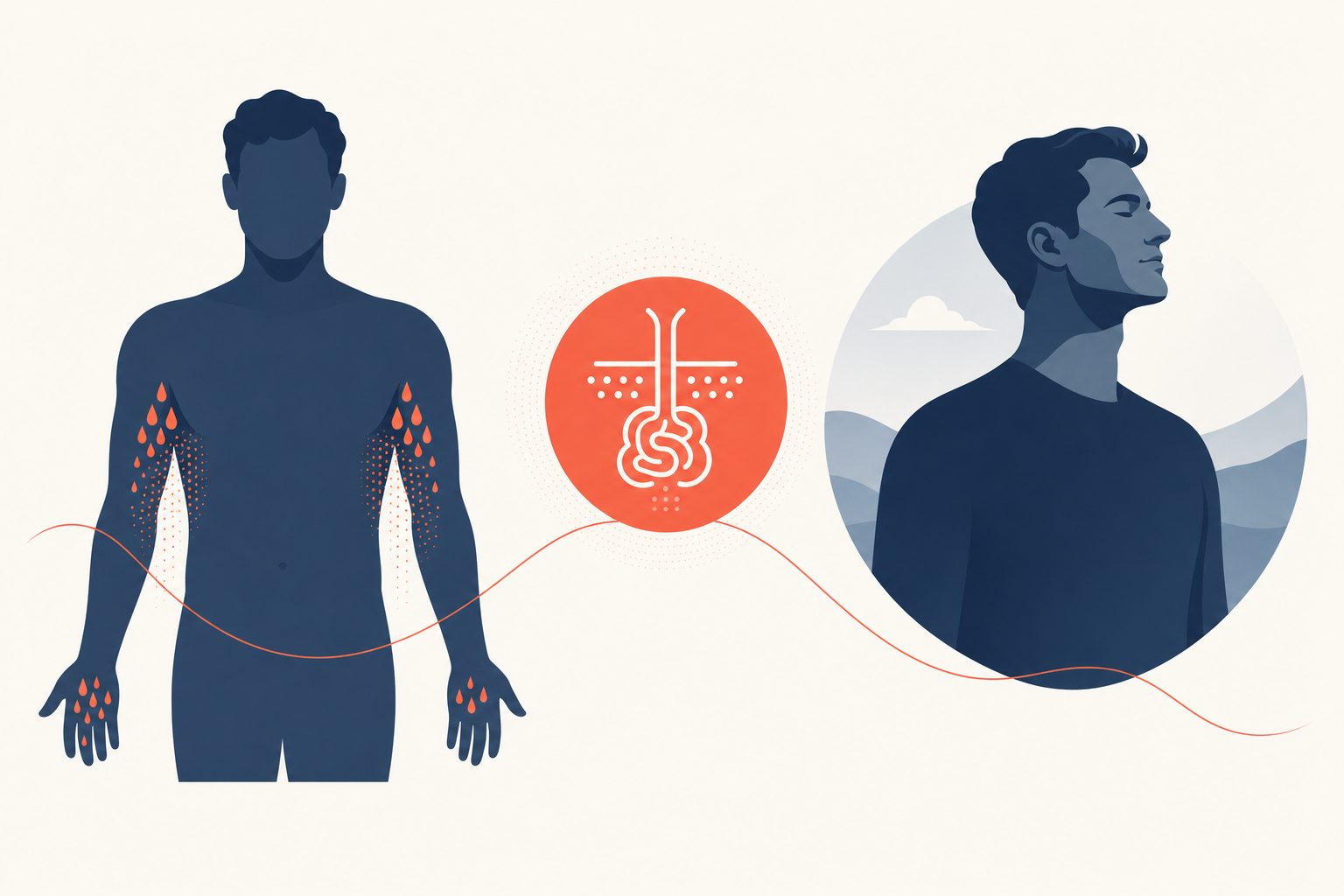
Hyperhidrosis, excessive sweating beyond what is needed for thermoregulation, affects millions of Americans, yet remains under-recognized and under-treated. This guide is a physician's evidence-based look at how hyperhidrosis is diagnosed, how the stepwise treatment ladder from aluminum chloride to Qbrexza to botulinum toxin actually works, and what the evidence says about iontophoresis, oral anticholinergics, and permanent options like miraDry and endoscopic thoracic sympathectomy in 2026. Every material claim is cited to a primary source.
What Is Hyperhidrosis?
Hyperhidrosis is a condition of sweating that exceeds what is physiologically necessary for thermoregulation, occurring unpredictably and disproportionately to heat or exertion. It is classified as either primary (idiopathic, focal) or secondary (caused by an underlying medical condition or medication).[2] The distinction is not academic. It determines whether a patient needs a diagnostic workup or can move directly to symptom-based treatment.
Primary vs secondary hyperhidrosis
Primary focal hyperhidrosis is the more common presentation. It is bilateral and relatively symmetric, confined to specific body regions (axillae, palms, soles, or face), typically begins before age 25, and, critically, stops during sleep.[3] A family history is present in roughly a third of cases, consistent with an autosomal dominant inheritance pattern in some families. Secondary hyperhidrosis, by contrast, tends to be generalized rather than focal, can begin at any age, often continues during sleep, and is driven by an identifiable cause such as an endocrine disorder, medication, infection, or malignancy.
Focal patterns: axillary, palmar, plantar, craniofacial
Primary focal hyperhidrosis has four characteristic distributions, and many patients have more than one simultaneously:
- Axillary (underarm): the most common presentation for which patients seek treatment, and the pattern with the most FDA-approved options, including Qbrexza and botulinum toxin A
- Palmar (palms): often the most socially and occupationally disruptive, given its impact on handshakes, paperwork, touchscreens, and grip
- Plantar (soles): frequently coexists with palmar disease, contributes to skin maceration and secondary infection risk
- Craniofacial (face and scalp): less common but disproportionately distressing due to visibility, harder to treat topically
Population surveys and clinical reviews consistently find axillary involvement to be the single most common focal pattern, followed by palmar and plantar disease, with craniofacial hyperhidrosis the least common but frequently the most psychosocially burdensome given its visibility in social and professional settings.[13]
HDSS: measuring severity
The Hyperhidrosis Disease Severity Scale (HDSS) is a validated, single-question tool that classifies severity from 1 to 4 based on how much sweating interferes with daily activities.[3] A score of 1 or 2 indicates tolerable or mild-to-moderate sweating; a score of 3 or 4 (sweating is barely or never tolerable and always or frequently interferes with daily activities) is considered severe and is the threshold most guidelines use to justify escalation to second-line therapy. Clinically, a one-point improvement in HDSS score correlates with an approximately 50 percent reduction in sweat production, and a two-point improvement correlates with roughly an 80 percent reduction, making it a practical tool for tracking treatment response over time.
Before starting any hyperhidrosis treatment, confirm the pattern is consistent with primary disease: focal, symmetric, onset before age 25, and stops during sleep. Sweating that is generalized, asymmetric, or continues overnight warrants a workup for secondary causes before symptomatic treatment begins.
What Causes Hyperhidrosis?
Primary hyperhidrosis: autonomic dysregulation
Primary focal hyperhidrosis is thought to result from a localized abnormality in the sympathetic nervous system's control of eccrine sweat glands rather than the glands themselves being structurally abnormal. The eccrine glands are histologically normal in number and structure. The dysfunction lies in the central and peripheral neural signaling that triggers sweat gland activation, meaning the glands are essentially normal, but the "on switch" is set too sensitively, firing in response to emotional and other non-thermal triggers, not just heat.[12] This autonomic dysregulation explains why primary hyperhidrosis responds well to treatments that block the neural or receptor-level signal (anticholinergics, botulinum toxin) rather than treatments that would address a structural gland problem.
Secondary causes to rule out
Secondary hyperhidrosis has a broad differential. Clinically relevant categories include:
- Endocrine: hyperthyroidism, diabetes mellitus (including hypoglycemia), menopause, pheochromocytoma, carcinoid syndrome, acromegaly
- Neurologic: Parkinson's disease, stroke, spinal cord injury, peripheral neuropathy
- Infectious: tuberculosis, HIV, endocarditis
- Malignancy: lymphoma and other cancers associated with paraneoplastic sweating and night sweats
- Medications: SSRIs and SNRIs, tricyclic antidepressants, opioids, antipsychotics, certain diabetes medications
- Other: anxiety disorders, obesity, pregnancy
A history and physical exam that supports the primary pattern (focal, symmetric, sleep-sparing, early onset, family history) generally obviates the need for extensive secondary workup. When features are atypical, generalized sweating, night sweats, adult onset without family history, or accompanying weight loss, palpitations, or fever, a basic panel (TSH, fasting glucose or HbA1c, chest X-ray, and a careful medication review) is a reasonable starting point.
What's Changed in 2024 to 2026
Hyperhidrosis treatment has seen incremental but meaningful movement over the past two to three years, spanning new drug approvals, expanded indications, and improved access.
Qbrexza's pediatric indication has matured. Qbrexza (glycopyrronium tosylate 2.4% cloth) was originally approved in 2018 for primary axillary hyperhidrosis in patients aged 9 and older, and real-world prescribing in the adolescent population has expanded as more pediatric dermatologists and primary care clinicians have become familiar with the once-daily cloth format.
Sofdra (sofpironium bromide) reached the US market. Sofdra, a topical anticholinergic gel structurally designed to be metabolized quickly after absorption (reducing systemic anticholinergic exposure compared with older agents), received FDA approval for primary axillary hyperhidrosis and has become a second topical anticholinergic option alongside Qbrexza.
Oral oxybutynin evidence has strengthened. Additional randomized and observational data on low-dose oral oxybutynin for both palmar and generalized hyperhidrosis have reinforced its role as an accessible, low-cost oral option, particularly for patients who cannot access or afford procedural treatments.[8][9]
MiraDry availability has broadened. MiraDry, the microwave thermolysis device for axillary hyperhidrosis, has become more widely available at dermatology and med-spa practices, with more clinicians positioning it as a durable, non-surgical alternative to repeated botulinum toxin cycles for appropriate candidates.
Telehealth prescribing has normalized further. Aluminum chloride, Qbrexza, Sofdra, oral oxybutynin, and glycopyrrolate can all be initiated through a synchronous telehealth visit in all 50 states, expanding access for patients who might otherwise avoid seeking care due to embarrassment. This matters clinically because hyperhidrosis is a condition patients frequently delay discussing for years, and a lower-friction path to a prescription can meaningfully shorten that delay.
Taken together, these shifts have not changed the fundamental treatment ladder, aluminum chloride still comes first, botulinum toxin is still the standard second-line procedural option, but they have added more topical options between first-line antiperspirants and injectable therapy, and they have made the entire pathway easier to access without an in-person dermatology referral for the first several steps.
Decision Framework: How Sweating Severity and Location Drive Treatment
Choosing a hyperhidrosis treatment depends on two variables above all others: which body region is affected and how severe the sweating is on the HDSS. The table below outlines the standard stepwise approach used by dermatologists and the International Hyperhidrosis Society.[2]
| HDSS Score | Location | First-line | Second-line | Third-line | Permanent option |
|---|---|---|---|---|---|
| 2 (mild-mod) | Axilla | Aluminum chloride 20% | Qbrexza; Botox | Oral anticholinergic | miraDry |
| 2 (mild-mod) | Palm/sole | Aluminum chloride 20% | Iontophoresis | Botox | ETS (palmar only) |
| 2 (mild-mod) | Face | Aluminum chloride (limited) | Oral anticholinergic | Botox | (none) |
| 3-4 (severe) | Axilla | Aluminum chloride + Qbrexza or Botox | Add oral anticholinergic | miraDry | ETS (rare) |
| 3-4 (severe) | Palm/sole | Iontophoresis + Botox | Add oral anticholinergic | ETS (palmar) | ETS |
| 3-4 (severe) | Face | Oral anticholinergic | Botox | (limited) | (limited) |
| Generalized | Whole body | Oral oxybutynin or glycopyrrolate | Combination therapy | Refer to dermatology | (none) |
This framework is a starting point, not a rigid protocol. In practice, most patients move through it iteratively: a topical agent is tried first regardless of severity, both because it is low-risk and inexpensive, and because a subset of even severe cases respond adequately if application technique is optimized. The HDSS score is reassessed at each follow-up, and escalation happens only when a treatment tried at an adequate dose and duration fails to bring the score down to a tolerable level (typically 1 or 2). Combination therapy, for example aluminum chloride plus Qbrexza, or iontophoresis plus a low-dose oral anticholinergic, is common in clinical practice and is often more effective and better tolerated than escalating any single agent to its maximum dose.
First-Line Therapy: Topical Antiperspirants
Aluminum chloride 20%: the workhorse
Aluminum chloride hexahydrate, at prescription concentrations of 10 to 20 percent (branded as Drysol and similar products), remains the first-line treatment for mild-to-moderate axillary, palmar, and plantar hyperhidrosis.[2] It works by forming a temporary plug within the sweat gland duct, mechanically obstructing sweat delivery to the skin surface. Roughly half of patients achieve a meaningful response with consistent use.[2]
Application technique
Technique matters enormously for aluminum chloride's efficacy and tolerability. It should be applied to completely dry skin at bedtime, ideally after towel-drying the axillae or affected area thoroughly, then washed off in the morning. Applying it to damp or freshly shaved skin, or during the day when sweating is active, both reduces efficacy (the compound reacts with water before it can plug the duct) and increases irritation. Occlusion with a light plastic wrap overnight can improve penetration for resistant cases, though this also increases irritation risk.
When to escalate
Escalation to second-line therapy is appropriate when aluminum chloride, used correctly and consistently for 2 to 4 weeks, fails to produce meaningful HDSS improvement, or when irritation (contact dermatitis, burning, itching) prevents continued use. Given how commonly technique errors (damp skin, daytime application) explain apparent treatment failure, confirming correct application before concluding a patient has failed first-line therapy is a worthwhile step.
Topical Anticholinergics: Qbrexza and Sofdra
Qbrexza (glycopyrronium 2.4% cloth)
Qbrexza is a single-use, pre-moistened cloth containing glycopyrronium tosylate 2.4%, FDA-approved in 2018 for primary axillary hyperhidrosis in patients aged 9 and older.[7] It is wiped once daily across both underarms at bedtime. As a topical anticholinergic, it blocks acetylcholine receptors on eccrine sweat glands, directly reducing their secretory output. In the pivotal ATMOS-1 and ATMOS-2 phase 3 trials (n=697 combined), significantly more Qbrexza-treated patients than vehicle-treated patients achieved a 4-point or greater improvement on the Axillary Sweating Daily Diary Item 2 score at week 4, with similarly significant improvement on gravimetrically measured sweat production.[4]
Sofdra (sofpironium)
Sofdra (sofpironium bromide 12.45% gel) is a newer topical anticholinergic, also FDA-approved for primary axillary hyperhidrosis. It was designed with a "soft drug" strategy, structured to be rapidly metabolized into an inactive form after local action and systemic absorption, intended to reduce systemic anticholinergic side effects relative to older topical or oral anticholinergic agents. Head-to-head trial data against Qbrexza is limited, so choice between the two agents in practice is often guided by insurance formulary coverage and individual tolerability.
Anticholinergic side effects
Both Qbrexza and Sofdra carry class-wide anticholinergic side effects, though generally milder than oral anticholinergics due to lower systemic absorption. The most common are dry mouth, dilated pupils (mydriasis) with associated blurred near vision, and localized skin irritation at the application site. Patients should be counseled to wash their hands thoroughly after application to avoid inadvertent transfer to the eyes, which can cause pupil dilation and blurred vision in the affected eye.
The Hyperhidrosis Disease Severity Scale is a single question: how would you rate the tolerability of your sweating? A score of 3 or 4, meaning sweating is barely tolerable or intolerable and interferes with daily activities, is the standard threshold for moving beyond topical antiperspirants to second-line therapy.
Iontophoresis: For Palms and Soles
Evidence and efficacy
Iontophoresis involves immersing the hands or feet in shallow trays of tap water while a mild direct electrical current passes through the water and skin. The exact mechanism is not fully understood, but the current is thought to temporarily disrupt sweat gland secretory function, possibly through changes in ion transport or transient occlusion of the sweat duct.[10] Multiple case series and small trials support meaningful reduction in palmar and plantar sweating with regular use, and it is FDA-cleared for this purpose.
Home devices vs clinic sessions
Iontophoresis can be delivered in-office or with an FDA-cleared home device (examples include Dermadry and RA Fischer units). Home devices carry a higher one-time cost (typically $500 to $900) but no per-session fee, while clinic-based treatment avoids the upfront device cost but requires recurring visits. For most patients pursuing iontophoresis long-term, a home device is more cost-effective and convenient.
Practical protocol
The typical induction protocol is 20 to 30 minute sessions, daily or every two to three days, for 6 to 10 sessions before meaningful improvement is seen. Once response is achieved, maintenance sessions are usually spaced to once or twice weekly. Mild tingling, and occasionally superficial burning if the current is set too high or skin has open cuts, are the main tolerability issues; both are managed by lowering current or adding safeguards like removing jewelry and confirming no metal contact with the electrodes.
Oral Anticholinergics: Oxybutynin and Glycopyrrolate
When to use
Oral anticholinergics are appropriate for generalized hyperhidrosis, for focal disease that has not responded adequately to topical or procedural options, or as an adjunct alongside topical or procedural treatment for partial responders. Unlike topical agents, oral anticholinergics act systemically, reducing sweat production across all eccrine glands rather than only in the treated area.
Dosing and titration
Oral oxybutynin is typically started at 2.5 to 5 mg once or twice daily and titrated upward based on response and side effects, commonly to 5 to 10 mg daily. A randomized, placebo-controlled trial of oxybutynin for palmar and axillary hyperhidrosis (n=50) found significant reduction in sweating and improved quality of life compared with placebo.[8] A follow-up study confirmed durable benefit with continued use.[9] Oral glycopyrrolate is usually started at 1 mg twice or three times daily, titrated to a maximum around 8 mg per day, with similar mechanism and side effect profile.
Anticholinergic burden considerations
Systemic anticholinergic side effects, dry mouth, blurred vision, constipation, and urinary retention, are the main limiting factor for oral therapy and are dose-dependent. Older patients and those on other anticholinergic medications (some antihistamines, tricyclic antidepressants, bladder antimuscarinics) accumulate anticholinergic burden, which has been associated with cognitive effects with long-term use in observational studies. Starting at a low dose and titrating slowly, and periodically reassessing whether the current dose remains necessary, is the standard mitigation strategy.
Botulinum Toxin A: The Second-Line Standard
Axillary Botox
Botulinum toxin A blocks acetylcholine release at the presynaptic neuromuscular and neuroglandular junction, preventing the sympathetic signal that triggers eccrine sweat gland secretion. Its use for hyperhidrosis was first described in a small case series in the mid-1990s, which reported meaningful reduction in axillary sweating after local injection and helped launch the larger trials that followed.[11] It is FDA-approved specifically for severe primary axillary hyperhidrosis inadequately managed with topical agents, an indication first approved in 2004. The pivotal Naumann and Lowe 2001 randomized, placebo-controlled trial (n=320) found that 82 percent of botulinum toxin patients achieved a 50 percent or greater reduction in sweat production, compared with 21 percent of placebo patients.[5] A subsequent 52-week multicenter trial confirmed durable efficacy and safety across repeated treatment cycles.[6]
Palmar and plantar Botox
Botulinum toxin is also used off-label, though widely accepted in clinical practice, for palmar and plantar hyperhidrosis. Injections are more technically demanding and more painful in these locations due to higher nerve density, often requiring regional nerve blocks or topical anesthesia beforehand, but efficacy data are similarly strong.
Duration of effect and repeat treatments
Most patients notice reduced sweating within 7 to 10 days of injection, with peak effect at 2 to 4 weeks. Duration of effect is typically 4 to 6 months in the axillae, with somewhat shorter duration reported for palms and soles (3 to 6 months) due to higher metabolic turnover in these areas. Repeat injections are required to maintain results indefinitely, and most insurance plans require documentation of HDSS severity and prior topical treatment failure for coverage.
Botulinum toxin A has been FDA-approved for axillary hyperhidrosis since 2004, well before many of its later cosmetic indications. For patients whose insurance denies coverage assuming a cosmetic use, documenting HDSS severity and prior topical treatment failure is usually sufficient for approval.
Permanent Options: miraDry and Endoscopic Thoracic Sympathectomy
miraDry (microwave thermolysis)
MiraDry is an FDA-cleared, non-invasive device that delivers targeted microwave energy to the dermal-subcutaneous junction, where eccrine and apocrine sweat glands reside, generating heat that destroys the glands. Because sweat glands do not regenerate once destroyed, miraDry's effect on axillary sweating is intended to be permanent after typically one to two treatment sessions.[14] It is currently approved only for axillary hyperhidrosis. Temporary swelling, tenderness, and altered sensation in the treated area are common short-term effects.
Endoscopic thoracic sympathectomy (ETS): compensatory sweating risk
Endoscopic thoracic sympathectomy is a surgical procedure that interrupts the sympathetic chain at the thoracic level, most commonly used for severe, treatment-refractory palmar hyperhidrosis, where success rates exceed 95 percent. It is reserved as a last resort because of its most significant side effect: compensatory sweating, a paradoxical increase in sweating in previously unaffected areas (commonly the trunk, abdomen, or back), which affects a substantial proportion of patients and is occasionally severe enough to be more bothersome than the original palmar sweating.[10] Thorough preoperative counseling about this trade-off is essential, and ETS should follow, not precede, adequate trials of topical, iontophoresis, and botulinum toxin therapy.
The level at which the sympathetic chain is interrupted, and whether it is clipped (potentially reversible) versus cut or cauterized (permanent), also affects the compensatory sweating rate, and this is a detail worth discussing with the operating surgeon in advance. Patients considering ETS should understand that reversing the procedure, even with clips, does not reliably reverse compensatory sweating once it has developed, which is part of why this option sits at the far end of the treatment ladder rather than earlier in it.
Ruling Out Secondary Causes: When to Order a Workup
The distinction between primary and secondary hyperhidrosis directly changes management, so it is worth revisiting in more diagnostic detail before discussing cost and access.
| Feature | Primary | Secondary |
|---|---|---|
| Distribution | Focal, bilateral (axillae, palms, soles, face) | Generalized or asymmetric |
| Age of onset | Before 25 (often adolescence) | Any age, often adult |
| Family history | ~35% (autosomal dominant traits) | Absent |
| Sleep | Stops during sleep | Continues during sleep |
| Underlying cause | Autonomic dysregulation, no identifiable cause | Endocrine, neurologic, infectious, malignant, drug |
| Workup required | Usually none | Yes: TSH, HbA1c, chest X-ray, drug review |
When the history and exam are consistent with secondary disease, generalized distribution, sleep involvement, adult onset without family history, or associated systemic symptoms (fever, weight loss, palpitations, night sweats), a basic laboratory and imaging workup (TSH, fasting glucose or HbA1c, complete blood count, chest X-ray) plus a careful review of prescription and over-the-counter medications is reasonable before initiating symptomatic hyperhidrosis therapy. Identifying and treating the underlying cause, rather than only masking the sweating symptom, is the goal in secondary disease.
Despite how common and treatable hyperhidrosis is, most affected patients never bring it up to a clinician, often assuming nothing can be done or feeling embarrassed to raise the topic. Epidemiologic surveys estimate that around 15.3 million U.S. adults have hyperhidrosis, roughly 4.8 percent of the population, yet only a small fraction, on the order of 2.6 million, are actively receiving treatment for it at any given time.[1] That gap reflects both under-recognition by clinicians, who may not screen for it during routine visits, and under-reporting by patients. Simply asking a direct question about sweating during a visit for another reason often surfaces cases that would otherwise go untreated for years.
Treatment Cost, Route, and Access in 2026
Cost and access are practical, decision-shaping factors that are easy to overlook in a strictly clinical discussion. The table below summarizes typical 2026 U.S. pricing and access requirements across the treatment ladder.
| Treatment | Route | 2026 US cost per cycle | Availability | Prescription needed? |
|---|---|---|---|---|
| Aluminum chloride 20% (Drysol) | Topical | $15-30 for 30-day supply | OTC or Rx | Both (Rx recommended for 20%) |
| Qbrexza (glycopyrronium 2.4% cloth) | Topical, once daily | $600-800/month cash; often $30-60 with insurance | Rx | Yes |
| Sofdra (sofpironium 12.45% gel) | Topical, once daily | $650-800/month | Rx | Yes |
| Oral oxybutynin (generic) | Oral, 5-10 mg daily | $10-30/month | Rx | Yes |
| Oral glycopyrrolate (generic) | Oral, 1-2 mg TID | $20-50/month | Rx | Yes |
| Iontophoresis (Dermadry, RA Fischer) | Device-based, 3x/wk initially | $500-900 device (one-time), $0/session | OTC device | No |
| Botulinum toxin A (axillary) | In-office injection | $1,000-1,500 per treatment (every 4-6 mo) | Clinic | Yes (in-office) |
| miraDry | In-office microwave treatment | $2,000-4,000 (typically 1-2 sessions) | Specialist | No (procedure) |
| Endoscopic thoracic sympathectomy | Surgery | $10,000-20,000 | Thoracic surgery | Yes (surgical referral) |
What Doesn't Work: Botanicals, "Detox," and Sweat Duct Occlusion Devices
No over-the-counter herbal supplement or "detox" product has rigorous clinical trial evidence supporting efficacy for hyperhidrosis. This is a common target for products making unsupported claims, given how much distress excessive sweating causes and how many patients search for a non-prescription fix.
"Detox" foot pads, sage or wheatgrass supplements marketed for sweating, and low-level laser sweat-reduction devices sold directly to consumers lack controlled trial evidence. None have been shown in randomized trials to meaningfully reduce sweat production compared with placebo.
A brief evidence summary of commonly marketed non-prescription approaches:
- Herbal antiperspirant sprays (sage, witch hazel): mild astringent effect at best; no controlled trial evidence of meaningful HDSS improvement
- Oral "detox" supplements: no plausible mechanism and no trial evidence; sweating is not primarily a toxin-elimination pathway in a way that supplementation would meaningfully alter
- At-home microneedling or "sweat duct sealing" devices: not FDA-cleared for hyperhidrosis and lack peer-reviewed efficacy data
- Baking soda or cornstarch powders: can absorb surface moisture and reduce odor but do not reduce underlying gland secretion
- Extra-strength over-the-counter antiperspirants (aluminum chlorohydrate, non-prescription strength): a reasonable first try for very mild cases but generally insufficient for true hyperhidrosis, which is why prescription-strength aluminum chloride is the actual first-line therapy
The takeaway: effective hyperhidrosis treatment is well-established, inexpensive at the first-line level (aluminum chloride, oral oxybutynin), and accessible via telehealth. Patients frustrated with over-the-counter options are better served moving up the evidence-based ladder than trying unproven alternative products.
Red Flags: When to Seek Prompt Medical Attention
Most hyperhidrosis is a chronic, benign, quality-of-life condition. However, certain features should prompt more urgent evaluation rather than routine hyperhidrosis management:
- Sudden onset of generalized sweating in adulthood without a clear trigger, particularly with weight loss, fever, or night sweats, which can suggest malignancy, infection, or endocrine disease
- Sweating accompanied by palpitations, tremor, weight loss, and heat intolerance, suggestive of hyperthyroidism
- Episodic sweating with headache, palpitations, and hypertension, which can suggest pheochromocytoma and warrants prompt endocrine evaluation
- Sweating with fever, unexplained weight loss, or lymphadenopathy, which raises concern for lymphoma or another malignancy and should not be attributed to primary hyperhidrosis without further workup
- New asymmetric sweating (one side of the body only), which can indicate a neurologic lesion and warrants neurologic evaluation
- Sweating with chest pain, shortness of breath, or diaphoresis at rest, which requires urgent evaluation for acute cardiac or other emergent causes rather than hyperhidrosis management
None of these red flags are typical of primary focal hyperhidrosis, which by definition lacks an identifiable underlying cause and has a longstanding, stable, sleep-sparing pattern. Any deviation from that pattern deserves a second look before defaulting to a hyperhidrosis diagnosis.
Frequently Asked Questions
Everyone sweats in response to heat, exercise, or stress. Hyperhidrosis is diagnosed when sweating is excessive relative to what is needed for thermoregulation, occurs unpredictably, and meaningfully interferes with daily activities.[2] Focal sweating (underarms, palms, soles, or face) that is bilateral, has been present for more than 6 months, started before age 25, and stops during sleep is the classic pattern of primary focal hyperhidrosis, one of the most common presentations that brings patients to care.
Primary hyperhidrosis is focal (specific body regions), bilateral, has no identifiable underlying cause, typically starts before age 25, runs in families in about a third of cases, and stops during sleep.[3] Secondary hyperhidrosis is generalized, can start at any age, continues during sleep, and is caused by an underlying condition such as hyperthyroidism, diabetes, menopause, certain medications, or, less commonly, malignancy. Ruling out secondary causes is the first step whenever the presentation is atypical for primary disease.
Regular over-the-counter antiperspirant, which contains lower concentrations of aluminum salts than prescription products, is often insufficient for true hyperhidrosis. Prescription-strength aluminum chloride 20%, applied to completely dry skin at bedtime, is the actual first-line treatment and produces a response in about half of patients.[2] Applying it correctly, to dry skin, at night, matters as much as the concentration itself.
Yes. Qbrexza is a once-daily medicated cloth containing glycopyrronium tosylate 2.4%, an anticholinergic that blocks the acetylcholine receptors on sweat glands, directly reducing their secretory output.[7] In the pivotal ATMOS-1 and ATMOS-2 phase 3 trials (n=697), significantly more Qbrexza patients than vehicle patients achieved a clinically meaningful improvement in sweat severity by week 4, with confirmatory gravimetric (measured sweat weight) improvement.[4] It is FDA-approved for primary axillary hyperhidrosis in patients aged 9 and older.
Botulinum toxin A typically provides 4 to 6 months of relief in the axillae per treatment cycle, with a somewhat shorter duration of 3 to 6 months commonly reported for palms and soles.[5][6] Most patients notice reduced sweating within 7 to 10 days of injection, with peak effect around 2 to 4 weeks. Repeat injections are required indefinitely to maintain results.
Oral oxybutynin has supportive randomized trial and follow-up evidence for hyperhidrosis at low to moderate doses (typically 5 to 10 mg daily).[8][9] The main long-term consideration is cumulative anticholinergic burden, dry mouth, constipation, and, with long-term high-dose use, a possible association with cognitive effects seen in some observational studies of anticholinergic medications broadly. Starting at the lowest effective dose and periodically reassessing whether continued treatment is still needed is the standard approach, particularly in older adults.
Iontophoresis involves placing the hands or feet in shallow water trays while a mild electric current passes through, temporarily reducing sweat gland activity in the treated area.[10] It is FDA-cleared and effective for palmar and plantar hyperhidrosis, with an induction course of 6 to 10 sessions and ongoing weekly or biweekly maintenance. It requires no prescription and can be done at home with an FDA-cleared device after the initial technique is learned.
The Hyperhidrosis Disease Severity Scale (HDSS) is a validated single-question tool that rates sweating tolerability and interference with daily activities on a 1 to 4 scale.[3] A score of 1 or 2 is considered mild-to-moderate and typically starts with topical antiperspirant. A score of 3 or 4 (barely or never tolerable, always or frequently interfering with activities) is the standard threshold for moving to second-line therapy such as Qbrexza, botulinum toxin, or iontophoresis.
Both are permanent-effect options reserved for treatment-resistant disease after adequate trials of topical, oral, and procedural options. MiraDry is non-invasive, FDA-cleared for axillary hyperhidrosis only, and destroys sweat glands with targeted microwave heat over one to two sessions.[14] Endoscopic thoracic sympathectomy is surgical, most often used for severe palmar hyperhidrosis, and carries a substantial risk of compensatory sweating in other body areas, which should be discussed thoroughly with a surgeon before proceeding.[10]
Yes, for most first-line and second-line therapies. A licensed clinician can evaluate your history for secondary causes and prescribe topical aluminum chloride, Qbrexza, Sofdra, and oral oxybutynin or glycopyrrolate through a synchronous telehealth visit in all 50 states. Procedural treatments, botulinum toxin injections, iontophoresis device fitting, miraDry, and ETS, require in-person visits and typically a dermatology or surgical referral.
Coverage varies by plan and treatment. Aluminum chloride, oral oxybutynin, and oral glycopyrrolate are generic and typically inexpensive with or without insurance. Qbrexza and Sofdra are brand-only and can cost $600 to $800 per month cash-pay, though many insurance plans cover them with a much lower copay once medical necessity (typically a documented HDSS score and failed topical therapy) is established. Botulinum toxin A for axillary hyperhidrosis is frequently covered when billed under its FDA-approved medical indication rather than as a cosmetic procedure.
Sudden-onset generalized sweating in adulthood, sweating with unexplained weight loss, fever, or night sweats, sweating with palpitations and heat intolerance, new asymmetric sweating, and sweating accompanied by chest pain or shortness of breath are not typical of primary hyperhidrosis and warrant prompt medical evaluation rather than routine hyperhidrosis management. Primary hyperhidrosis has a stable, longstanding, sleep-sparing pattern; any significant deviation from that pattern deserves further workup.
References
- Doolittle J, Walker P, Mills T, Thurston J. Hyperhidrosis: an update on prevalence and severity in the United States. Arch Dermatol Res. 2016;308(10):743-749. Full text
- International Hyperhidrosis Society. Hyperhidrosis Treatment Algorithms. Full text
- Solish N, Bertucci V, Dansereau A, et al. A comprehensive approach to the recognition, diagnosis, and severity-based treatment of focal hyperhidrosis: recommendations of the Canadian Hyperhidrosis Advisory Committee. Dermatol Surg. 2007;33(8):908-923. Full text
- Glaser DA, Hebert AA, Nast A, et al. Topical glycopyrronium tosylate for the treatment of primary axillary hyperhidrosis: Results from the ATMOS-1 and ATMOS-2 phase 3 randomized controlled trials. J Am Acad Dermatol. 2019;80(1):128-138.e2. Full text
- Naumann M, Lowe NJ. Botulinum toxin type A in treatment of bilateral primary axillary hyperhidrosis: randomised, parallel group, double blind, placebo controlled trial. BMJ. 2001;323(7313):596. Full text
- Lowe NJ, Glaser DA, Eadie N, et al. Botulinum toxin type A in the treatment of primary axillary hyperhidrosis: a 52-week multicenter double-blind, randomized, placebo-controlled study. J Am Acad Dermatol. 2007;56(4):604-611. Full text
- U.S. Food and Drug Administration. Qbrexza (glycopyrronium) cloth, 2.4%, Prescribing Information. 2018. Full text
- Wolosker N, de Campos JR, Kauffman P, Puech-Leão P. A randomized placebo-controlled trial of oxybutynin for the initial treatment of palmar and axillary hyperhidrosis. J Vasc Surg. 2012;55(6):1696-1700. Full text
- Delort S, Marchi E, Corrêa MA. Oxybutynin as an alternative treatment for hyperhidrosis. An Bras Dermatol. 2017;92(2):217-220. Full text
- Nawrocki S, Cha J. The etiology, diagnosis, and management of hyperhidrosis: A comprehensive review: Therapeutic options. J Am Acad Dermatol. 2019;81(3):669-680. Full text
- Bushara KO, Park DM, Jones JC, Schutta HS. Botulinum toxin: a possible new treatment for axillary hyperhidrosis. Clin Exp Dermatol. 1996;21(4):276-278. Full text
- Nawrocki S, Cha J. The etiology, diagnosis, and management of hyperhidrosis: A comprehensive review: Etiology and clinical work-up. J Am Acad Dermatol. 2019;81(3):657-666. Full text
- Callejas MA, Grimalt R, Cladellas E. Hyperhydrosis update. Actas Dermosifiliogr. 2010;101(2):110-118. Full text
- Stuart ME, Strite SA, Gillard KK. A systematic evidence-based review of treatments for primary hyperhidrosis. J Drug Assess. 2020;10(1):35-50. Full text