2026 U.S. Cyclosporiasis Outbreak Tracker
CDC surveillance current as of May 1 – August 3, 2026 · last verified by our team August 5, 2026
Source update (as of July 21): The FDA and CDC link one large cluster (1,644 cases, 94 hospitalizations) to shredded iceberg lettuce from Taylor Farms de Mexico served at Taco Bell in Indiana, Kentucky, Michigan, Ohio, and West Virginia. The recall remains active and CDC still advises against eating it. Note: on July 19 the FDA retracted a single lettuce lab test as a “false positive” and apologized to Taylor Farms for that error — but the FDA and CDC say this does not change the investigation, which rests on epidemiologic and traceback data, and the recall stands. Other nationwide cases are still under investigation.
State health-department counts (often higher than CDC)
State totals include probable cases and update faster than the federal count, so they run ahead of CDC figures.
Primary sources: CDC Cyclosporiasis Surveillance · FDA CORE Outbreak Investigation Table. State counts from health-department reporting via national news outlets. Figures are provisional and change frequently.
Key Takeaways
- The 2026 U.S. cyclosporiasis outbreak is one of the largest on record: the CDC has confirmed more than 10,400 domestic cases with over 400 hospitalizations and no deaths (as of early August), plus more than 12,000 additional cases under review — well over 20,000 suspected nationwide.
- State health departments report far higher numbers than the federal count — Michigan alone surpassed 10,000 cases and Ohio 4,000 by late July — because state data update faster and include probable cases.
- In mid-July, the FDA and CDC linked one large 1,644-case cluster to shredded iceberg lettuce from Taylor Farms de Mexico served at Taco Bell (in Indiana, Kentucky, Michigan, Ohio, and West Virginia), and a recall was issued that remains active. Do not eat the recalled lettuce; CDC still advises against it.
- A note on the “false positive”: On July 19 the FDA retracted a single lettuce lab sample it had called positive and apologized to Taylor Farms for the lab error. The FDA and CDC say this does not change the investigation — the link rests on epidemiologic and traceback data (how outbreak sources are usually found), not on a positive food test — and the recall stays in effect.
- For cases outside that cluster, no product has been confirmed, so safe produce handling remains the main defense — and washing does not reliably remove the parasite.
- Cyclospora is missed on routine stool tests. If you have prolonged or relapsing watery diarrhea, you must specifically ask for Cyclospora PCR or acid-fast stool testing.
- It is highly treatable. The antibiotic TMP-SMX (Bactrim) — one double-strength tablet twice daily for 7–10 days — is the treatment of choice for adults who are not allergic to sulfa drugs.
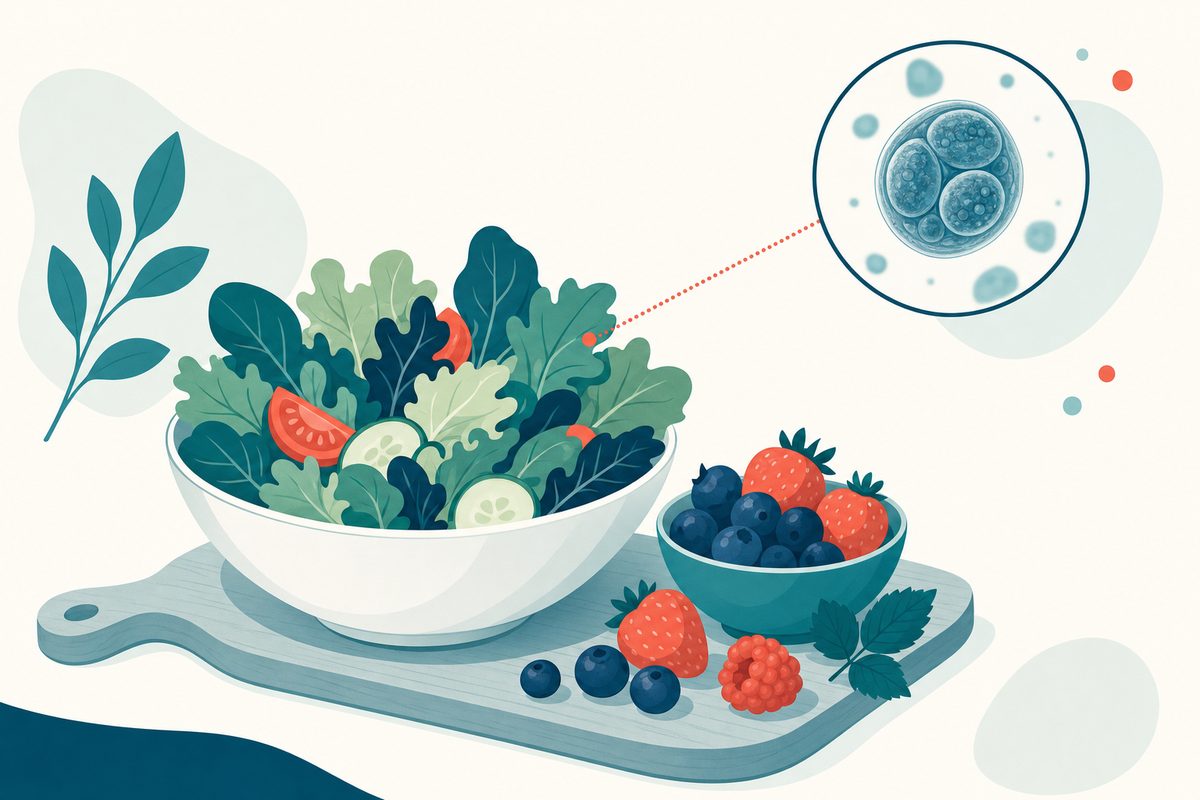
A fast-moving outbreak of cyclosporiasis — an intestinal infection caused by a microscopic parasite that produces weeks of watery, sometimes explosive diarrhea — has become one of the largest the United States has seen in years. This guide, reviewed by a board-certified physician, explains what the parasite is, why it is so easy to miss, how it is correctly diagnosed and treated, and how to protect your household while investigators work to find the source. The live tracker above is updated as the CDC and FDA release new figures.
What Is Cyclosporiasis?
Cyclosporiasis is an intestinal illness caused by the single-celled parasite Cyclospora cayetanensis. People become infected by swallowing food or water contaminated with the parasite — most often fresh produce grown or irrigated in conditions exposed to feces. Importantly, the illness does not spread directly from person to person: freshly passed parasite oocysts are not immediately infectious and need days to weeks in the environment before they can infect someone else, per the CDC.[5]
The time between infection and illness is usually about one week but can range from as little as 2 days to 2 weeks or more.[2] That long, variable lag — combined with an estimated six-week delay between when people get sick and when cases are reported to federal authorities — is a major reason outbreaks are hard to trace and why reported case counts lag well behind the true number of infections.
The Parasite — and Why It's So Hard to Wash Off
Understanding one quirk of Cyclospora's biology explains almost everything confusing about this illness: why it isn't contagious, why washing produce doesn't reliably remove it, and why a hot summer drives outbreaks. When the parasite is passed in stool, its egg-like oocysts are not yet infectious. They must spend days to weeks outside a host, in warm, moist conditions, to "sporulate" — to mature into an infectious form.[8]
This single fact has three practical consequences:
- It's not spread person to person. Because freshly passed oocysts can't infect anyone for days, you cannot catch it from a sick family member the way you catch a norovirus stomach bug — and food handled by an infected cook shortly before serving should not, by itself, cause illness.[8]
- It thrives in warm months. The days-to-weeks sporulation window is temperature-dependent, which is why the U.S. "cyclosporiasis season" runs May 1 through August 31.[7]
- Washing can't be trusted to remove it. The oocysts are sticky and environmentally hardy. Laboratory work shows they persist on herb and leafy-green surfaces throughout a growing season, and the CDC states that routine chemical disinfection or sanitizing of food and water is unlikely to kill the parasite.[4][9] Contamination happens in the field, through feces-tainted irrigation water, and the parasite lodges in the microscopic texture of berries and greens where rinse water doesn't reach.
The one thing that reliably destroys it is heat. Cooking kills Cyclospora; freezing does not. That is why, during an active outbreak with no identified product, cooked produce carries the least risk.
Symptoms: What Cyclospora Feels Like
Cyclospora infects the small intestine. The hallmark symptom is watery diarrhea with frequent, sometimes explosive bowel movements. What sets it apart from ordinary "stomach bugs" is its duration and its pattern: untreated, the illness can last from a few days to a month or longer, and it often follows a remitting-relapsing course — symptoms fade, you think you are better, and then they return.[2]
Common symptoms, per the CDC clinical overview, include:
- Watery diarrhea (the most common symptom)
- Loss of appetite and unintentional weight loss
- Abdominal cramping, bloating, and increased gas
- Nausea and prolonged fatigue
- Less often: vomiting, body aches, low-grade fever, and other flu-like symptoms
The clinical clue that matters most
Diarrhea that lasts more than a few days or keeps coming back in waves — especially since early May 2026 — is the pattern that should prompt Cyclospora-specific testing. A typical viral gastroenteritis resolves in a day or two; Cyclospora does not.
Cyclospora vs. Viral Gastroenteritis ("Stomach Bug")
Most short-lived diarrhea is viral gastroenteritis — the common "stomach bug" caused by norovirus, rotavirus, and similar viruses. Because the early symptoms overlap, cyclosporiasis is frequently mistaken for an ordinary stomach bug, and that mistake matters: a viral illness clears on its own in a day or two, while Cyclospora can grind on for weeks and needs a specific antibiotic to resolve. The distinguishing features below are what separate the two in practice.
| Feature | Cyclosporiasis (parasite) | Viral Gastroenteritis ("stomach bug") |
|---|---|---|
| Cause | Cyclospora cayetanensis parasite, from contaminated food or water[2] | Viruses such as norovirus or rotavirus |
| Duration | Days to a month or more if untreated; often in relapsing waves[1] | Usually resolves in 1–3 days |
| Course | Remitting-relapsing — symptoms fade, then return[1] | Steady, then steadily improves |
| Onset after exposure | About 1 week (range 2 days–2 weeks+)[2] | Fast — typically 12–48 hours |
| Contagious? | No — not spread person to person[5] | Yes — highly contagious between people |
| Vomiting | Less prominent; diarrhea dominates | Often prominent, especially early |
| Weight loss / prolonged fatigue | Common with the prolonged course[1] | Uncommon (illness is too brief) |
| Diagnosis | Requires Cyclospora-specific stool testing (PCR or acid-fast stain)[1] | Usually clinical; specific testing rarely needed |
| Treatment | Antibiotic TMP-SMX (Bactrim)[3] | Supportive care only (fluids, rest) |
The practical takeaway: if watery diarrhea has lasted more than a few days, keeps relapsing, or comes with notable weight loss and fatigue — particularly during this outbreak — do not assume it is a passing stomach bug. That pattern is the signal to seek care and specifically ask about Cyclospora testing. For everyday, short-lived stomach bugs, our viral gastroenteritis treatment guide covers when supportive care is enough and when to see a clinician.
What Your Doctor Is Thinking: The Clinical Reasoning
When a patient describes several days of watery diarrhea, a clinician runs through a mental differential — and in a typical week, Cyclospora would sit low on that list. Most acute diarrhea is viral and self-limited. What moves Cyclospora up the list is a specific combination of clues, and knowing them helps you advocate for the right workup.
The features that raise suspicion:
- Duration and relapse. Diarrhea that has lasted more than about a week, or that improved and then relapsed, is not typical of a viral stomach bug and points toward a parasite.[1]
- The clinical company it keeps. Prominent fatigue, poor appetite, and unintentional weight loss alongside the diarrhea are classic for cyclosporiasis and unusual for a 24-hour virus.[1]
- Timing and exposure. Illness during May–August, and any history of eating fresh produce like berries, leafy greens, or fresh herbs, fits the seasonal, produce-borne pattern.
- The outbreak itself. In 2026, a compatible illness is a reason to test even without a known exposure, because a large multistate outbreak is underway.
A clinician also weighs the alternatives that can mimic it — Giardia (another parasite causing prolonged, sometimes relapsing diarrhea and bloating), bacterial causes, and, in anyone recently on antibiotics, C. difficile. The reason this matters to you: several of these, including Cyclospora, are missed unless the clinician specifically orders targeted testing rather than relying on a basic panel.
Why It's Missed: Diagnosis Requires a Specific Test
Here is the single most important thing for patients to understand: Cyclospora is not detected on standard stool tests. Ova-and-parasite testing for Cyclospora requires special stains or laboratory procedures that most U.S. labs do not run routinely, and not all gastrointestinal PCR panels include a Cyclospora target.[1] If a clinician does not specifically think of it and order the right test, the diagnosis is missed.
Correct testing means asking for one of the following:
- Stool PCR that specifically includes a Cyclospora target (molecular detection of the parasite's DNA)
- Modified acid-fast or "hot" safranin staining, or examination for autofluorescent oocysts under UV microscopy
Two practical caveats from the CDC: a single negative stool specimen does not rule out cyclosporiasis, and patients may need to submit several specimens collected on different days.[1] If your symptoms fit and the first test is negative, do not assume you are in the clear.
Treatment: What Actually Works
The good news is that cyclosporiasis is highly treatable. The treatment of choice is the antibiotic trimethoprim-sulfamethoxazole (TMP-SMX) — sold as Bactrim, Septra, or Cotrim. The standard regimen for immunocompetent adults, per the CDC, is:[3]
Standard adult regimen (CDC)
TMP 160 mg + SMX 800 mg (one double-strength tablet), by mouth, twice a day, for 7–10 days. People living with HIV may need longer courses of therapy.
A few important points on treatment:
- Sulfa allergy: No highly effective alternative to TMP-SMX has been established. Options the CDC describes for people who cannot take it include observation and symptomatic care, an antibiotic with only limited supporting data, or supervised desensitization — the last only for selected patients evaluated by an allergist who do not have a life-threatening allergy.[3] This is a decision to make with a clinician.
- Anti-diarrheal medicines such as loperamide (Imodium) may ease symptoms but do not cure the infection — the parasite still needs the antibiotic to clear.
- Rehydration matters. Weeks of diarrhea can cause meaningful fluid and electrolyte loss; oral rehydration is an important part of supportive care.
Prolonged or relapsing diarrhea? Get evaluated today.
A board-certified physician can review your symptoms over a same-day video visit, advise on Cyclospora-specific stool testing, and prescribe treatment when appropriate — $79 flat, with select Aetna, BCBS, and UHC plans also accepted.
Book a Same-Day Video VisitPrevention: Protecting Your Household
One large cluster has been tied to a specific product: the recalled shredded iceberg lettuce from Taylor Farms de Mexico served at Taco Bell in Indiana, Kentucky, Michigan, Ohio, and West Virginia. The FDA and CDC advise against eating the recalled lettuce, and the recall remains active — even though the FDA retracted a single lab test as a false positive on July 19, because the link is based on epidemiologic and traceback evidence rather than a food-sample test. Beyond that cluster, many nationwide cases still have no identified product, so general produce safety matters. The most important thing to understand is that washing reduces risk but does not reliably remove Cyclospora. The CDC notes that routine chemical disinfection or sanitizing of food and water is unlikely to kill the parasite, and its oocysts can lodge in the surfaces and crevices of produce such as berries and leafy greens.[4] Cooking is the only reliable way to kill it — heat destroys Cyclospora, while freezing does not.
Practical steps drawn from CDC guidance:[4]
- Wash hands with soap and water before and after handling or preparing raw fruits and vegetables.
- Wash all fruits and vegetables thoroughly under running water before eating, cutting, or cooking — even if you plan to peel them. (Produce labeled "prewashed" does not need re-washing.)
- Scrub firm produce such as melons and cucumbers with a clean produce brush.
- Cut away damaged or bruised areas before preparing.
- When you want the most certainty during an active outbreak, favor cooked produce — heat is the one method confirmed to destroy the parasite.
Historically, U.S. cyclosporiasis outbreaks have been repeatedly linked to categories of fresh produce including raspberries, basil, cilantro, snow peas, mesclun lettuce, and bagged salads. In the 2026 outbreak, investigators have tied one large cluster to shredded iceberg lettuce from Taylor Farms de Mexico (served at Taco Bell in five states) on epidemiologic and traceback evidence — consistent with that history of contaminated leafy greens — while other nationwide cases remain under investigation.[6]
High-Risk Foods: What Three Decades of Outbreaks Tell Us
Beyond the confirmed Taco Bell lettuce cluster, the source of many other 2026 cases is still unknown — and history is the most useful guide to risk. Since the mid-1990s, U.S. cyclosporiasis outbreaks have clustered around a predictable set of fresh, raw produce categories — almost always items eaten uncooked and, historically, often imported from regions where the parasite is endemic.[10] The recurring culprits are fresh berries (especially raspberries), fresh herbs (basil, cilantro), leafy greens and bagged salads, and snow peas.
| Year | Food vehicle identified | Reported cases |
|---|---|---|
| 1996 | Raspberries imported from Guatemala | ~1,465 (US & Canada)[11] |
| 1999 | Fresh basil (Missouri) | ~62[10] |
| 2013 | Bagged salad mix from Mexico | ~162[10] |
| 2018 | Fast-food salads (Fresh Express, Streamwood IL) | 511 across 15 states[9] |
| 2019 | Fresh basil | ~241 across 11 states[10] |
| 2020 | Bagged salad (iceberg, red cabbage, carrots) | 701 across 14 states[12] |
| 2021 | Lettuce / leafy greens | ~130[10] |
Two patterns stand out. First, the vehicle is almost always eaten raw — cooking would have prevented these outbreaks. Second, even careful traceback frequently fails to pin down a single farm; in the large 2020 bagged-salad outbreak, the FDA completed its traceback but could not conclusively confirm the source.[12] That is exactly the situation in 2026, and it is why individual food-handling choices — not a recall — are your main protection right now.
Recovery, Relapse, and What to Expect After Treatment
For most people who are not immunocompromised, the outlook is good. Once the correct antibiotic is started, symptoms typically ease within a few days, though full recovery of energy and appetite can take longer after a prolonged illness. The critical point is that the infection does not reliably clear on its own: untreated, it can persist or relapse in waves for a month or more, which is why testing and treatment shorten what would otherwise be a miserable, drawn-out course.[1]
A few things to expect and watch for:
- Finish the full course. Complete the entire 7–10 day TMP-SMX course even after you feel better, and tell your clinician if diarrhea returns after treatment — some patients, especially those with weakened immune systems, need a longer course.[3]
- Rehydrate throughout. Weeks of diarrhea deplete fluids and electrolytes; oral rehydration solutions are more effective than water alone for replacing what's lost.
- Lingering gut symptoms such as bloating or irregular bowel habits can persist briefly after any prolonged intestinal infection; new or worsening symptoms warrant a re-check.
Where to Get Care: Telehealth, In-Person, or the ER
Cyclosporiasis is, for most healthy adults, an outpatient illness — but knowing the right door to knock on saves time and worry.
| Your situation | Best setting |
|---|---|
| Prolonged or relapsing watery diarrhea, otherwise stable, able to keep fluids down | Telehealth or in-person visit — a clinician can advise on Cyclospora-specific stool testing and prescribe TMP-SMX |
| You need a stool test ordered and a prescription, but aren't severely ill | Same-day telehealth visit is well suited to this |
| Signs of significant dehydration, high fever, bloody stools, severe abdominal pain, or you can't keep any fluids down | Urgent in-person or emergency care |
| Infant, older adult, pregnant, or immunocompromised with persistent diarrhea | Prompt medical evaluation — lower threshold for in-person care |
Because Cyclospora requires a specific stool test and a specific antibiotic — neither of which is part of routine self-care — a prolonged or relapsing illness is genuinely worth a visit rather than waiting it out. A synchronous video visit with a physician is an efficient way to get the right test ordered and, when appropriate, treatment prescribed.
Who Is Most at Risk
Anyone can be infected. Most otherwise healthy people recover, with or without treatment, though the illness can drag on for weeks. Because prolonged diarrhea causes dehydration, it can be more serious for older adults, young children, and people who are immunocompromised. People living with HIV, in particular, may experience more severe or prolonged illness and can require longer antibiotic courses.[3] In the 2026 outbreak, the CDC reports cases spanning ages 5 to 88, with a median age of 44.[7]
When to See a Doctor
Contact a clinician if watery diarrhea lasts more than a few days, keeps returning after seeming to improve, or comes with significant weight loss, dehydration, or profound fatigue — and specifically mention the outbreak and ask about Cyclospora testing. Seek urgent in-person care for signs of severe dehydration (dizziness, very little urine, rapid heartbeat), high fever, bloody stools, or an inability to keep fluids down.
Frequently Asked Questions
Cyclosporiasis typically causes watery diarrhea with frequent, sometimes explosive bowel movements, along with loss of appetite, weight loss, abdominal cramping and bloating, increased gas, nausea, and prolonged fatigue. Symptoms usually begin about a week after exposure and, without treatment, can last from a few days to a month or more, often in a remitting-relapsing pattern where symptoms fade and then return.
Cyclospora is not detected on routine stool tests. Diagnosis requires specifically requesting testing for Cyclospora, using stool PCR (only some GI PCR panels include a Cyclospora target) or special acid-fast staining. A single negative stool sample does not rule it out, and several specimens collected on different days may be needed. If you have had prolonged or relapsing diarrhea since May 2026, ask your clinician to order Cyclospora-specific testing.
The treatment of choice is the antibiotic trimethoprim-sulfamethoxazole (TMP-SMX, sold as Bactrim, Septra, or Cotrim). The typical regimen for immunocompetent adults is one double-strength tablet (TMP 160 mg / SMX 800 mg) taken orally twice a day for 7 to 10 days. There is no highly effective alternative for people with a sulfa allergy, so those patients need individualized management. People with HIV may require longer courses.
Washing helps reduce risk but does not reliably remove Cyclospora. The CDC states that routine chemical disinfection or sanitizing of food or water is unlikely to kill the parasite, and the oocysts can cling to the surfaces and crevices of produce such as berries and leafy greens. Cooking is the most reliable way to kill Cyclospora, since heat destroys it. Freezing does not.
No. Cyclosporiasis does not spread directly from person to person. People become infected only by swallowing food or water contaminated with the parasite, and freshly passed oocysts are not immediately infectious — they need days to weeks in the environment to become infectious. This is why outbreaks are traced to contaminated food or water rather than sick contacts.
See a clinician if watery diarrhea lasts more than a few days, keeps returning after seeming to improve, or is accompanied by significant weight loss, dehydration, or profound fatigue. Because Cyclospora is missed on standard testing and requires a specific antibiotic, prolonged or relapsing diarrhea since May 2026 warrants a visit and a request for Cyclospora-specific stool testing. Seek urgent in-person care for signs of severe dehydration, high fever, bloody stools, or inability to keep fluids down.
Without treatment, the illness can last from a few days to a month or more, often in a remitting-relapsing pattern where symptoms fade and then return. With the correct antibiotic (TMP-SMX), symptoms typically improve within a few days, although energy and appetite can take longer to fully recover after a prolonged course. Because it does not reliably clear on its own, testing and treatment are what shorten the illness.
Historically, U.S. outbreaks have been linked to fresh, raw produce eaten uncooked: raspberries and other berries, fresh herbs such as basil and cilantro, leafy greens and bagged salads, and snow peas. Past outbreaks have often involved produce imported from regions where the parasite is endemic. In the 2026 outbreak no specific product has been confirmed, so these historical categories are the best guide to caution. Cooking any produce reliably kills the parasite.
No. As of mid-July 2026 the outbreak is active and growing, with the CDC and FDA still investigating and no source identified. The U.S. cyclosporiasis season runs May 1 through August 31, and cases typically peak in summer. The live tracker at the top of this guide reflects the latest verified CDC and FDA figures and is updated as new data are released.
No. Cyclospora is not spread person to person. The parasite passed in stool is not immediately infectious; it needs days to weeks in the environment to mature before it can infect anyone. People become infected only by consuming food or water contaminated with the mature (sporulated) parasite, which is why outbreaks trace to produce or water rather than to contact with sick people.
References
- Centers for Disease Control and Prevention (CDC). Clinical Overview of Cyclosporiasis. Last reviewed March 4, 2024. https://www.cdc.gov/cyclosporiasis/hcp/clinical-overview/index.html
- Centers for Disease Control and Prevention (CDC). About Cyclosporiasis. Last reviewed September 4, 2024. https://www.cdc.gov/cyclosporiasis/about/index.html
- Centers for Disease Control and Prevention (CDC). Clinical Care of Cyclosporiasis. Last reviewed March 8, 2024. https://www.cdc.gov/cyclosporiasis/hcp/clinical-care/index.html
- Centers for Disease Control and Prevention (CDC). Preventing Cyclosporiasis. https://www.cdc.gov/cyclosporiasis/prevention/index.html
- Centers for Disease Control and Prevention (CDC). About Cyclosporiasis — Transmission. https://www.cdc.gov/cyclosporiasis/about/index.html
- U.S. Food and Drug Administration (FDA). Investigation of 5-State Outbreak of Cyclospora Illnesses — Iceberg Lettuce (Taco Bell), July 2026. Advisory posted July 15–16, 2026. https://www.fda.gov/food/outbreaks-foodborne-illness/investigation-5-state-outbreak-cyclospora-illnesses-iceberg-lettuce-july-2026. See also the FDA CORE Outbreak Investigation Table.
- Centers for Disease Control and Prevention (CDC). Surveillance of Cyclosporiasis (2026 domestically acquired cases). Updated July 10, 2026. https://www.cdc.gov/cyclosporiasis/php/surveillance/index.html
- Herwaldt BL. Cyclospora cayetanensis: A Review, Focusing on the Outbreaks of Cyclosporiasis in the 1990s. Clinical Infectious Diseases. 2000;31(4):1040–1057. https://academic.oup.com/cid/article/31/4/1040/372808
- U.S. Food and Drug Administration (FDA). Warning Letter: Fresh Express Inc. (Div. of Chiquita Brands) — 2018 & 2020 cyclosporiasis outbreaks linked to Streamwood, IL bagged salad. https://www.fda.gov/inspections-compliance-enforcement-and-criminal-investigations/warning-letters/fresh-express-inc-609899-div-chiquita-brands
- Almeria S, et al. Cyclospora cayetanensis and Cyclosporiasis: major outbreaks from ready-to-eat produce (1996–2021). PMC. https://pmc.ncbi.nlm.nih.gov/articles/PMC7699734/
- Herwaldt BL, Ackers ML. An Outbreak in 1996 of Cyclosporiasis Associated with Imported Raspberries. New England Journal of Medicine. 1997. https://pubmed.ncbi.nlm.nih.gov/9164810/
- U.S. Food and Drug Administration (FDA). Outbreak Investigation of Cyclospora: Bagged Salads (June 2020). https://www.fda.gov/food/outbreaks-foodborne-illness/outbreak-investigation-cyclospora-bagged-salads-june-2020