Key Takeaways
- Topical steroid withdrawal is a rebound skin reaction that can follow stopping a potent topical corticosteroid after prolonged or inappropriate use, often on the face.[1]
- Symptoms include burning, redness, and a flare worse than the original condition, and recovery can take months to years.[1]
- The main risk factor is prolonged use of mid-to-high potency steroids, especially on thin skin like the face and genitals.[1]
- Safe management is a supervised taper rather than abrupt stopping, plus supportive skin care.[2]
- There is substantial online misinformation on both sides, and abruptly quitting legitimate steroid treatment out of fear can itself cause harm.[3]
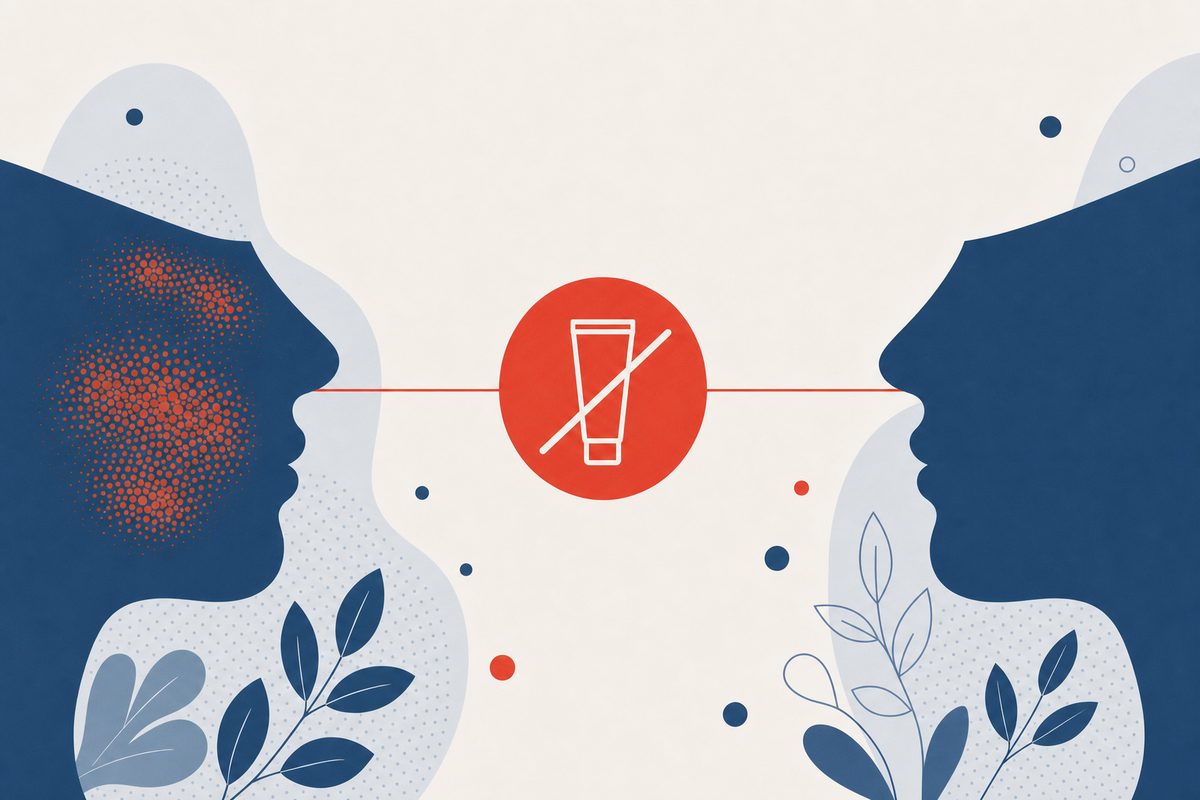
Few dermatology topics are more emotionally charged online than topical steroid withdrawal. On one side are people who describe a burning, oozing, months-long rebound after stopping a steroid cream and feel dismissed. On the other are clinicians who worry that internet fear has made people abandon safe, necessary treatment for eczema. Both are describing something real, and both are right to be concerned. This guide explains what the condition actually is, what the evidence supports, and how to stop a steroid safely.
What Is Topical Steroid Withdrawal?
Topical steroid withdrawal, also called red skin syndrome or topical steroid addiction, is a set of skin symptoms that can develop when a topical corticosteroid is stopped after prolonged, frequent, or inappropriate use.[1] Instead of the original condition simply returning, the skin flares more intensely than before, often with burning, intense redness, and sensitivity that the steroid had been masking.[1]
Symptoms
The classic description is skin that burns rather than itches, turns a vivid red, and feels raw, sometimes with oozing or swelling, appearing worse than the eczema or rash the steroid was treating.[1] This is different from a simple flare of the underlying condition, because the character is different, burning and erythema predominate, and it affects areas where the steroid was applied.
Who Gets It
The main risk factor is prolonged, frequent use of mid- to high-potency steroids, particularly on thin skin such as the face, eyelids, and genitals.[1] It is most often reported by people who used these stronger steroids for months or years, sometimes for conditions where a weaker or shorter approach would have been appropriate. Occasional, short-course, or appropriately prescribed steroid use carries far lower risk.[1]
| Steroid use pattern | Withdrawal risk |
|---|---|
| Low-potency, short course | Very low |
| Mid-potency, occasional | Low |
| High-potency, prolonged, on face | Higher[1] |
Why It Happens
Steroid creams work by constricting blood vessels and suppressing inflammation. With prolonged use the skin can become dependent, and when the drug is withdrawn, those blood vessels dilate again, sometimes with a rebound, producing the burning redness.[2] This is the same mechanism that underlies the withdrawal flare seen in steroid-induced perioral dermatitis.
The Debate
This is a genuinely contested area, and honesty requires saying so. A 2015 systematic review in the Journal of the American Academy of Dermatology concluded that the phenomenon is real and occurs after prolonged, inappropriate use of potent steroids, but that the severe, long-lasting form is uncommon and not fully characterized.[1] At the same time, a 2023 review documented how online misinformation can fuel "corticophobia," leading people to abruptly stop legitimate steroid treatment, which can cause its own harm by leaving conditions like eczema untreated.[3]
The balanced positions are both true: potent steroids should not be used indefinitely on delicate skin, and safe, appropriately prescribed steroids should not be abandoned out of fear. The resolution of both is the same, get a clinician to supervise how the steroid is used and how it is stopped.
| Feature | Withdrawal reaction | Original condition (e.g. eczema) |
|---|---|---|
| Main feeling | Burning more than itching[1] | Itching more than burning |
| Timing | Starts after stopping the steroid | Flare of the underlying trigger |
| Appearance | Intense red, raw, sometimes oozing[1] | Typical rash pattern |
| Response to steroid | The steroid itself is the cause | Steroid treats the flare |
Treatment
Management is supportive and time-based. The steroid is stopped, ideally by tapering, reducing the potency and frequency gradually rather than stopping a strong steroid cold.[2] A steroid-sparing or lower-potency step-down may be used. Skin care during recovery is simple: bland moisturizers, avoiding irritants, and treating any infection that develops in broken skin.[2]
| Step | Action |
|---|---|
| 1 | Stop the offending steroid, but taper rather than stop abruptly[2] |
| 2 | Use bland, preservative-free moisturizers[2] |
| 3 | Avoid further irritants and heavy products |
| 4 | Treat any skin infection that develops |
How Long Does It Last?
Recovery is often measured in months, and in a minority of severe cases, longer.[1] The withdrawal flare peaks and then slowly improves as the skin readjusts. This is the part people find hardest, and the part most helped by medical supervision and realistic expectations.
What to Avoid
Do not restart the steroid to quiet the flare, which restarts the cycle. Do not abruptly stop a prescribed steroid without medical guidance out of internet-driven fear. And do not manage a suspected withdrawal reaction with unsupported remedies from social media.[3]
When to See a Doctor
See a clinician if you have burning, intensely red, or oozing skin after stopping or tapering a steroid, if the skin shows signs of infection such as yellow crusting or spreading warmth, or if you are considering changing any prescribed steroid treatment. A clinician can distinguish a withdrawal reaction from the underlying condition and an infection, which is the difference between the right and wrong next step.
Frequently Asked Questions
Burning, intense redness, and skin that flares worse than the original condition, sometimes with oozing or swelling.[1]
Often months, and in a minority of severe cases, longer. The flare peaks and then slowly improves.[1]
Yes, a rebound after stopping prolonged potent steroid use is a recognized phenomenon, though the severe, long-lasting form is uncommon and debated.[1]
Tapering, under medical guidance, is safer than abruptly stopping, to reduce the rebound.[2]
The skin can become dependent with prolonged potent use, and stopping can produce a rebound, which is why the term steroid addiction is sometimes used.[2]
Not abruptly, and not because of social media alone. Discuss any change with a clinician, since stopping necessary treatment can cause its own harm.[3]
The steroid constricts blood vessels and suppresses inflammation, and on withdrawal those effects reverse, producing burning and redness, a rebound.[2]
References
- Hajar T, Leshem YA, Hanifin JM, Nedorost ST. A systematic review of topical corticosteroid withdrawal ("steroid addiction") in patients with atopic dermatitis and other dermatoses. Journal of the American Academy of Dermatology. 2015;72(3):541-549.e2. doi:10.1016/j.jaad.2014.11.024
- Fukaya M, Sato K, Sato M, Kimata H. Topical steroid addiction in atopic dermatitis. Drug Healthc Patient Saf. 2014;6:131-138. doi:10.2147/DHPS.S69201
- Finnegan P, Murphy M, O'Connor C. #corticophobia: a review on online misinformation related to topical steroids. Clinical and Experimental Dermatology. 2023;48(2):112-115. doi:10.1093/ced/llac019